

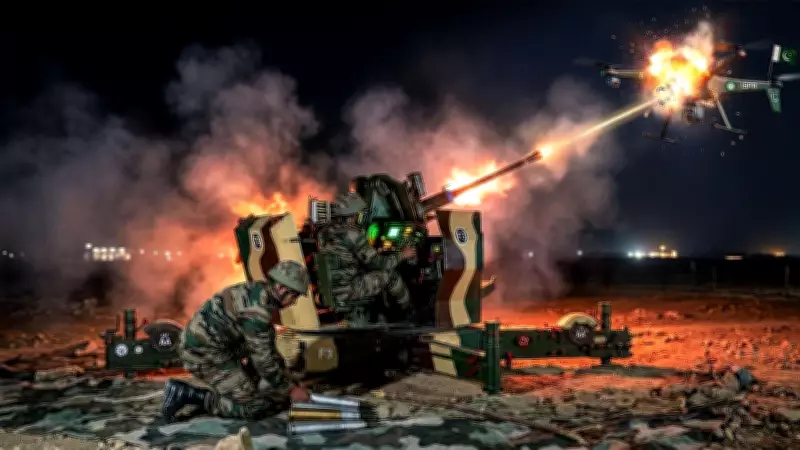
In one of the largest drone incursions in the region, Pakistan deployed hundreds of unmanned aerial vehicles (UAVs) targeting Indian military and strategic locations last year. While India activated its full air defence network, a surprising system played a critical role — the decades-old L-70 Bofors gun.
Legacy System, Modern Upgrades
Originally designed in the 1940s and inducted into the Indian Army in the 1960s, the L-70 has been upgraded with modern targeting systems, radar integration, and counter-drone capabilities. These enhancements have transformed it into an effective weapon against low-flying, hard-to-detect UAVs.
How the Upgraded L-70 Works
The upgraded L-70 Bofors gun features advanced fire control systems that allow it to track and engage small, fast-moving drones. Integration with battlefield radars provides early warning and precise targeting data. The gun's high rate of fire and explosive shells are particularly effective against swarms of UAVs, which are difficult to intercept with missiles alone.

Relevance in Modern Warfare
This explainer breaks down how legacy systems like the L-70 are being adapted for modern warfare, why they remain relevant, and what this means for India's evolving air defence strategy. The success of the L-70 underscores the value of upgrading existing platforms rather than relying solely on new, expensive systems.
Strategic Implications for India
The L-70's performance has prompted the Indian Army to accelerate upgrades of other legacy systems. It also highlights the need for layered air defence, combining high-end missiles with cost-effective gun-based solutions. As drone technology evolves, India's approach to counter-drone warfare will likely involve a mix of electronic warfare, directed energy weapons, and upgraded conventional guns like the L-70.






