Vadodara Innovators Develop Robotic Sewer Cleaner to End Road Digging
In a groundbreaking development for urban infrastructure, two childhood friends from Vadodara have joined forces to create a robotic device designed to detect and clear stubborn blockages in sewers. This innovation promises to eliminate the disruptive practice of digging up roads to fix such problems, offering a cleaner and more efficient solution.
From Problem to Patent: The Journey of a Municipal Solution
The Vadodara Municipal Corporation (VMC) currently employs various methods to tackle clogged sewage lines, including manual efforts with steel rods, jetting machines, and in severe cases, super-sucker machines. When these fail, the affected pipeline section is often excavated and replaced, causing significant inconvenience and damage to roadways.
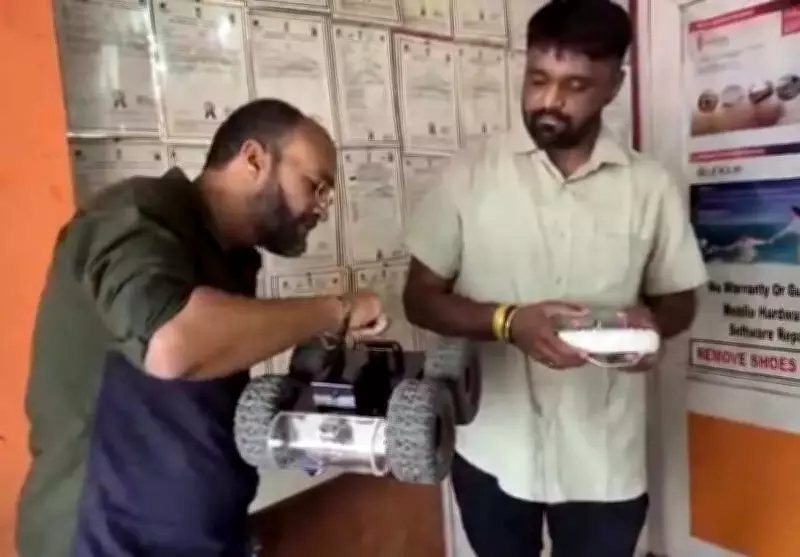
Narvirsinh Chudasama, a municipal councillor from the Old Padra Road area, was motivated by the repeated road digging to seek a better alternative. "I discussed this with my schoolmate, Mithilesh Patel, who has developed several devices earlier. Together we decided to design a robotic machine that could enter a sewage line, diagnose the problem and help resolve it," Chudasama explained.

How the Robotic Device Works
The duo has developed a proof of concept and secured a patent for their invention, titled 'Robotic Device for Drainage Cleaning'. The device operates in two key phases:
- Assessment: It first enters the sewer line to assess the extent of a blockage using an AI-enabled ESP32 camera and sensors. These components analyze the obstruction and estimate the volume of material blocking sewage flow.
- Bioremediation: Based on the analysis, the device determines the quantity of microbes needed to break down the blockage through bioremediation, a process that uses bacteria to dissolve organic matter.
Patel highlighted the robot's capabilities, noting it can move through sludge and wastewater with ease. "Once we know the size and nature of the blockage, we can determine the quantity of microbes needed to break it down," he said.
Affordability and Advanced Features
One of the standout advantages of this device is its cost-effectiveness. Patel revealed that the prototype was developed for approximately Rs 25,000 to Rs 30,000. "Even after adding more AI features, it will remain cheaper than similar devices in the market, which cost several lakhs and involve high operation and maintenance expenses," he emphasized.
Further improvements are already in the pipeline, including enhanced GPS resolution and additional AI features to boost efficiency. Initial trials have been conducted, and the robot is currently being refined based on feedback and testing results.
Microbial Innovation and Future Applications
Chudasama's wife, who holds a degree in microbiology, played a crucial role by connecting the team with microbiologists to identify suitable bacteria. "In laboratory trials, we identified bacteria that could dissolve about 100 grams of material blocking a sewage line within 15 to 20 minutes. We are now working to find microbes that can speed up the process further," Chudasama shared.
The ultimate goal is for the robot to autonomously calculate the required quantity of microbes and spray them directly onto the blockage inside the sewer, streamlining the entire cleanup process.
Impact on Municipal Infrastructure
This innovation represents a significant leap forward in municipal maintenance, potentially saving time, resources, and reducing public inconvenience. By preventing road digging, it also contributes to longer-lasting infrastructure and fewer disruptions in urban areas.
As the device undergoes further development, it holds promise for adoption by municipalities across India and beyond, addressing a common urban challenge with cutting-edge technology and sustainable practices.