

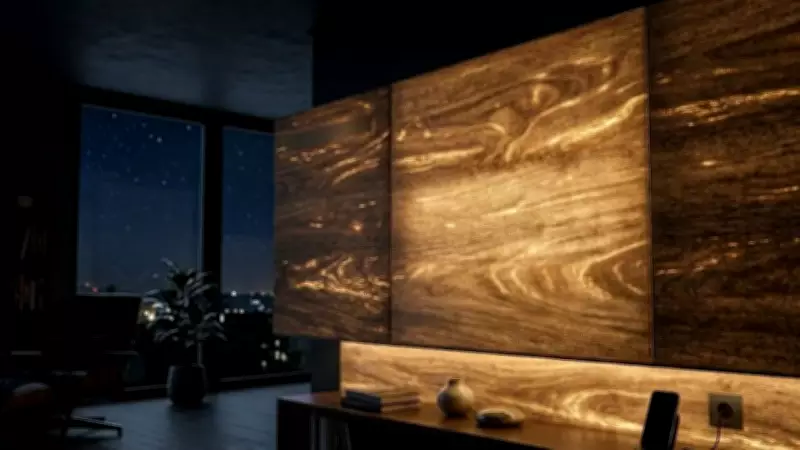
Wooden 'Solar Battery' Revolutionises Sustainable Home Heating
In a groundbreaking advancement for sustainable architecture, scientists have successfully transformed ordinary timber into an advanced thermal reservoir, effectively creating a 'solar battery' that stores solar energy for long-term use. This innovation addresses key limitations of traditional solar systems, such as intermittence, by leveraging bio-based materials to provide stable thermal conditions that release stored energy well after sunset.
Chemical Process Enables Thermal Storage
At the KTH Royal Institute of Technology, researchers have developed a chemical delignification process to remove lignin from wood. The resulting porous structure is then infused with polyethene glycol (PEG), a phase change material. When exposed to sunlight, the PEG melts and absorbs significant heat energy—approximately 760 kilojoules per kilogram (kJ/kg). As temperatures drop at night, the PEG crystallises, releasing the stored heat into the home. This mechanism allows the material to function as a passive climate control system without electricity, even in total darkness.
Enhanced Efficiency with Plasmonic Nanoparticles
To maximise solar absorption, scientists have embedded plasmonic nanoparticles into the wood's micro-channels, as detailed in a Science Advances publication. These metallic particles are engineered to resonate with the solar spectrum, trapping and converting photons into thermal energy with an efficiency rate nearing 99%. The natural hierarchical structure of wood fibres acts as a light trap, causing sunlight to bounce repeatedly within porous channels until fully absorbed as heat. This process can elevate the material's temperature to over 82 degrees Celsius (180 degrees Fahrenheit) within minutes, making it suitable not only for space heating but also for applications like solar-driven steam generation and water purification.

Decarbonising Residential Energy Use
According to the US Department of Agriculture, residential energy consumption is a major source of carbon emissions. Engineered wood offers a solution by reducing reliance on electrical grids and HVAC systems through passive thermal regulation. Acting as a thermal mass, it helps maintain indoor temperatures while serving as a carbon sink, locking away atmospheric carbon throughout the building's lifespan. Unlike synthetic batteries, these wood-based thermal batteries are biodegradable and sourced from sustainably managed forests, aligning with global decarbonisation goals in the construction industry.
Implications for Zero-Carbon Living
This discovery, rooted in advanced materials science, paves the way for achieving zero carbon emissions in home heating and temperature control. By utilising wood's natural porous structure, the technology bridges energy harvesting and long-term storage, effectively turning building walls into insulated heat batteries. It represents a significant step toward eco-conscious construction, offering a renewable alternative that enhances energy efficiency and sustainability in modern architecture.






