

US Vice President JD Vance Amplifies Immigration Restrictions, Skirts Green Card Concerns
In a significant policy address, US Vice President JD Vance has emphatically reinforced the Trump administration's hardline stance on immigration, expressing deepened skepticism toward the H-1B visa program and positioning national "loyalty" as the paramount criterion for immigrants seeking to build lives in America.
Georgia Town Hall Address Avoids Backlog Solutions
Speaking at a TurningPointUSA town hall event in Georgia, Vance faced a direct question from an Indian-origin student regarding the decades-long green card backlog that affects over a million Indian professionals. Rather than proposing policy remedies or addressing the specific legislative hurdles, the Vice President pivoted to broader themes of systemic fraud within the H-1B program and cultural expectations of assimilation.
The US Veep, who has historically characterized the H-1B program as a mechanism for "big tech" to suppress American wages—despite receiving early political funding from tech giants—told the young audience that the current system is "rife with abuse." He stated, "You can believe that there is a lot of H-1B fraud while also believing that there are people who have come to the United States who enriched this country."

Personal Anecdotes Frame Loyalty Debate
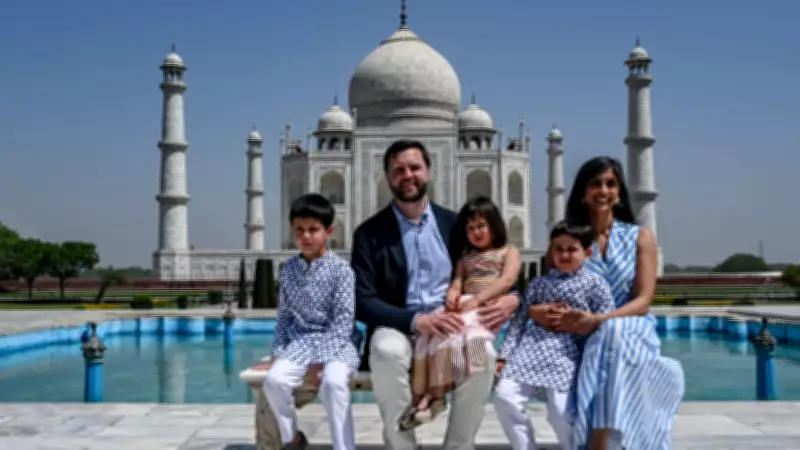
Vance invoked his family to illustrate his points, citing his wife, Second Lady Usha Vance, and her parents as archetypes of successful assimilation. "Look, I am married to the daughter of immigrants from India…I love my in-laws and they’ve been great contributors to the United States," he said. He emphasized that upon becoming a US citizen, regardless of lineage, one's obligation is to prioritize America's interests over those of their country of origin.
Expressing frustration at a Ukrainian-American who had questioned him about arms supplies to Ukraine, Vance recounted that his father-in-law, an American citizen, never urged him to make decisions favoring India. "To the extent that attitude dominates among the new generation of immigrants, that makes Americans feel welcoming. To be an American means to look out for Americans first and that’s the perspective we have to take to our immigration policy," he argued.
Background on Vance's In-Laws Highlights Legal Immigration
Vance's in-laws, Radhakrishna "Krish" Chilukuri and Dr. Lakshmi Chilukuri, immigrated from Andhra Pradesh, India, in the late 1970s. Krish Chilukuri, a mechanical engineering graduate from IIT Madras, serves as a lecturer in aerospace engineering at San Diego State University. Dr. Lakshmi Chilukuri is a professor of molecular biology at the University of California, San Diego. Both have established distinguished academic careers in California after arriving through legal channels decades ago.
Policy Focus Shifts from Quotas to Overall Reduction
While the student's question centered on law-abiding, high-tax-paying professionals enduring prolonged waits due to country-based quotas—such as the 7% per-country cap that favors smaller nations like Nepal and Sri Lanka—Vance avoided commitments to raise these limits. Instead, he suggested that substantially lowering immigration levels across the board is essential for maintaining America's social cohesion.
"The system only works if everybody thinks of themselves as an American first," Vance asserted, effectively concluding the exchange without tackling the specific backlog issues facing Indian applicants.
Political Reactions and Broader Implications
The remarks garnered enthusiastic praise from the MAGA wing of the Republican Party, which has increasingly advocated for curbing even legal immigration. However, critics swiftly panned the stance, with some noting that the loyalty test appears inconsistently applied, citing examples like Jewish Americans who openly lobby for Israel.
As the 2026 midterm elections approach, Vance's calibrated position reflects the delicate balance the Trump administration must strike: appeasing its restrictionist base while not alienating the technology and business sectors that depend heavily on H-1B talent for innovation and growth.

