Lava Blaze Duo 3: A Dual-Screen Smartphone That Balances Innovation with Everyday Use
In a crowded smartphone market where brands constantly experiment with form factors to capture attention, domestic manufacturer Lava has doubled down on its distinctive approach with the Lava Blaze Duo 3. Rather than pursuing mere design novelty, this device aims to make its secondary screen genuinely functional for daily tasks. Priced competitively at Rs 17,499 on Amazon, the Blaze Duo 3 combines a slim profile, the MediaTek Dimensity 7060 chipset, Android 15, and a 50MP camera system. But the central question persists: does this dual-screen innovation translate into real-world usability, or is it simply an added feature without substantial benefit?
Design and Display: Where Form Meets Function
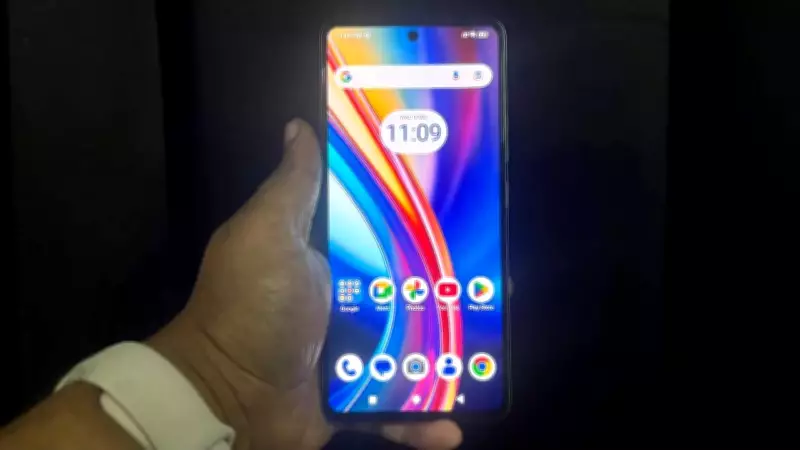
The Lava Blaze Duo 3 immediately distinguishes itself through its dual-display configuration. The secondary 1.6-inch AMOLED screen on the rear integrates seamlessly into the design, avoiding the appearance of an afterthought. This display provides quick access to notifications, music controls, and serves as a viewfinder for selfies using the rear camera, adding a layer of practical utility.
Complementing this is the phone's slim form factor. Measuring just 7.55mm in thickness and weighing approximately 181 grams, the Blaze Duo 3 feels noticeably lighter and more manageable than many bulkier devices in its price range. It sits comfortably in the hand, facilitating extended use without fatigue. The matte finish on the Imperial Gold variant effectively resists fingerprints, while the overall build quality feels robust enough for everyday durability.

The primary display is a 6.67-inch FHD+ AMOLED panel with a 120Hz refresh rate. In daily usage, the screen delivers smooth scrolling through applications and social media feeds. Colors are vibrant, and contrast levels are adequate for video streaming. Watching content and engaging in casual gaming proves immersive, thanks to the high refresh rate and wide viewing angles. However, outdoor visibility under intense sunlight could be improved.
While the secondary display is handy for quick tasks like checking notifications or controlling music, its functionality remains somewhat limited. Most interactions still necessitate switching back to the main screen, indicating room for further integration.
Performance and Software: Smooth Operations with Minor Hiccups
Under the hood, the Blaze Duo 3 is powered by the MediaTek Dimensity 7060 SoC, paired with up to 12GB of RAM (including virtual RAM). Day-to-day tasks such as app switching, web browsing, and media streaming are handled with ease. The phone's UFS 3.1 storage ensures decent app load speeds, and multitasking performance is satisfactory.
Casual games run smoothly, but more demanding titles like BGMI may experience occasional frame drops when graphics settings are elevated. The device runs on Android 15, offering a clean, user-friendly interface devoid of bloatware or intrusive advertisements. Lava's commitment to providing Android 16 updates and two years of software support enhances the phone's long-term value. During testing, connectivity aspects including calls, Wi-Fi, and cellular performance presented no discernible issues.
Camera Capabilities: Daylight Strengths and Low-Light Challenges
The camera setup comprises a 50MP Sony IMX752 primary sensor, a secondary QVGA lens, and an 8MP front-facing camera. In well-lit conditions, the main camera captures images with good color reproduction and acceptable detail. Photos are sufficiently sharp for social media sharing, though dynamic range could be better in high-contrast scenarios.
The secondary display introduces an interesting advantage: selfies taken using the rear camera yield superior image quality compared to those from the front camera. However, low-light performance is inconsistent. Images tend to exhibit noise and diminished detail in challenging lighting. Night mode offers some improvement but does not fully resolve these issues. Video recording supports up to 2K at 30fps, producing usable footage in good light, though stabilization could be enhanced.

Battery Life and Charging: All-Day Endurance with Reliable Speeds
The Lava Blaze Duo 3 houses a 5,000 mAh battery, delivering reliable all-day performance with moderate usage. Activities like video streaming, web browsing, and light gaming do not aggressively drain the battery. In testing, the phone consistently lasted a full day, often retaining some charge into the evening.
The included 33W fast charging is more than adequate for daily needs. It can replenish 50% of the battery in under 35 minutes and achieve a full charge in approximately 90 to 95 minutes. While not the fastest charging solution in this segment, it accomplishes the task efficiently with minimal hassle.
Verdict: A Distinctive Choice with Room for Refinement
Priced at Rs 17,499, the Lava Blaze Duo 3 stands out with its dual-screen feature, offering a unique alternative in the budget smartphone market. Its slim design, smooth performance, and clean Android experience ensure a well-rounded user experience for everyday operations.
Nevertheless, the secondary screen, though useful, often feels like an add-on rather than an integral component of the user experience. Areas such as low-light camera performance and the functional depth of the secondary display present opportunities for enhancement.
For consumers seeking a smartphone with a distinctive design and an uncluttered Android interface, the Blaze Duo 3 is certainly worth considering. It represents a commendable step toward making dual-screen technology more accessible and practical, even if it hasn't fully realized the concept's potential.