Motorola Signature Review: A Premium Smartphone with AI Flair and Design Focus
Motorola has consistently aimed to make bold statements in the smartphone market, and its latest offering, the Signature, is no exception. Positioned as a premium device, the Motorola Signature emphasizes sophisticated design, lifestyle enhancements, and AI-driven experiences. Starting at Rs 59,999, this phone boasts a slim profile of just 6.99mm and is available in two distinct colors: Pantone Martini Olive and Pantone Carbon. It features a Snapdragon 8 Gen 5 chip, a triple-camera system with 50MP Sony sensors, Bose-tuned speakers, and exclusive services through the Motorola Signature Club. While the specifications are impressive on paper, real-world performance across key areas reveals a more nuanced story.
Design and Display: Sleek Yet Slippery
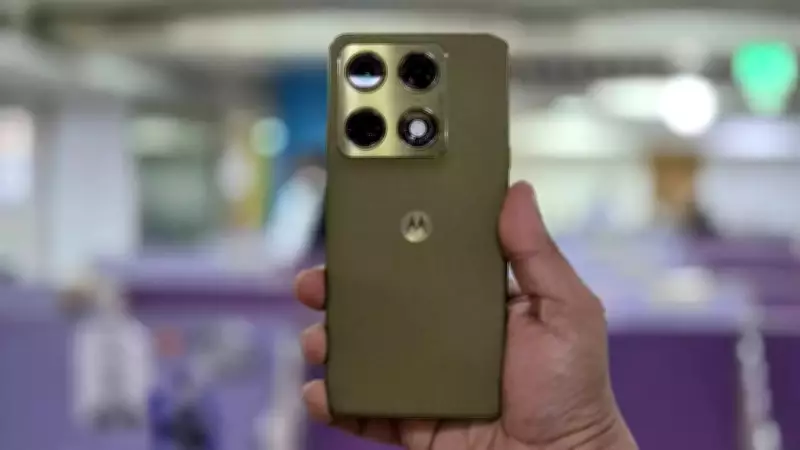
Upon picking up the Motorola Signature, its slimness is immediately noticeable. At 6.99mm thick and 186g, it feels like a premium card rather than a bulky glass slab. However, this sleek design comes with a downside: the phone can be slightly slippery without a case, posing a risk when handling other items simultaneously. The Pantone Martini Olive finish on the back features a twill-inspired crosshatch texture that catches light beautifully, giving the phone a raw yet composed golden-greenish appearance. This linen-inspired back effectively resists fingerprints, adding to its distinct identity.
The camera module is large and prominent, lending a flagship-like look, though it causes some wobble when placed on flat surfaces. The cameras and flashlight are arranged in a 2x2 grid, framed by gold-tone metal rings on a raised square platform that integrates seamlessly into the overall form. The aircraft-grade aluminium frame ensures rigidity without adding bulk, while the Motorola batwing logo on the rear is finished in a subtle tone-on-tone gold.

The front is dominated by a 6.8-inch curved AMOLED display, offering an immersive viewing experience with a 165Hz refresh rate that makes content look vibrant and fluid indoors. Watching visually rich films like Dune: Part Two or the claustrophobic drama Adolescence on Netflix provided engaging cinematic experiences with accurate color reproduction. However, the display struggles in direct sunlight, making it difficult to read despite claims of 6,200 nits peak brightness. Adaptive brightness helps but falls short in outdoor conditions. The Always-On Display and LTPO panel work smoothly to save power, and the under-display fingerprint scanner is mostly responsive, with occasional misses.
Camera System: AI-Driven with Mixed Results
Motorola has equipped the Signature with a triple 50MP camera setup: a Sony LYTIA 828 primary sensor, a 122-degree ultrawide lens, and a Sony LYTIA 600 periscope telephoto with 3x optical and up to 100x digital zoom. In practice, the primary camera delivers clean, detailed photos with decent color accuracy under good lighting. The ultrawide camera handles architecture and landscapes without significant distortion, and its autofocus is surprisingly quick. Standard shots in daylight or bright indoor settings exhibit good dynamic range.
However, the camera system relies heavily on AI processing, with no option for natural or raw output. This becomes particularly frustrating with the telephoto lens, where zoomed-in photos appear over-sharpened, with textures that look sculpted rather than natural. Low-light performance is average, suitable for casual shooting but not exceptional. The front 50MP camera produces decent selfies with reasonable skin tone accuracy but lags behind some competitors. On a positive note, video recording excels with stable footage, smooth camera transitions, and effective slow-motion modes. Overall, the camera performance is decent but not top-tier for this price segment.

Performance and Software: Fast with Thermal Limits
Powered by the Snapdragon 8 Gen 5 chip, the Signature delivers fast performance in everyday tasks. On the tested 16GB RAM and 1TB storage version, apps opened instantly, multitasking was fluid, and the Android 16 interface with Motorola's clean software layer felt responsive. Motorola promises seven years of Android and security updates, a significant long-term advantage. However, gaming exposes thermal limitations: running titles like BGMI and Call of Duty: Mobile at high settings for extended sessions causes noticeable warmth and frame rate drops. The cooling system, including a copper-mesh liquid-metal solution and a 6002 mm² vapour chamber, is effective but constrained by the thin chassis. The phone also heats up during charging, which users should consider if charging while in use.
Connectivity is strong, with reliable Wi-Fi performance, stable 5G in weak coverage areas, and support for Bluetooth 6, NFC, and USB 3.2 Type-C for rapid file transfers. A dedicated AI button on the left edge summons Moto AI features, though it can be prone to accidental presses. Moto AI proves useful, with features like Catch Me Up, which summarizes missed notifications into a clean digest, and Playlist Studio, which creates mood-based playlists on Amazon Music. The memory and screenshot recall feature allows easy retrieval of saved images using casual descriptions, while Gemini image-generation produces detailed visuals from text prompts quickly.
Audio and Battery: Highlights with Caveats
The stereo speakers, tuned by Bose and certified for Dolby Atmos, deliver a wide, layered soundstage that outperforms many competitors. Dialogue in shows is clear, and music has depth and dimension. However, at maximum volume, the speakers can sound harsh with distorted bass; at 70-80% volume, the audio experience is among the best in smartphones.
The 5200mAh silicon-carbon battery is rated for up to 41 hours of use but in practice requires daily charging for mixed use, including browsing, calls, camera use, and social media. Heavy users will likely need an evening recharge. The 90W TurboPower wired charging is a standout feature, reaching 50% in about 15 minutes and full charge in under an hour. The 50W wireless charging is convenient but generates noticeable heat. Overall, fast charging compensates for the battery's endurance limitations.
Verdict: A Strong Case for Design and Software
Priced at Rs 59,999, the Motorola Signature is a slim, elegant device that stands out with its design and Bose-tuned speakers. After weeks of daily use, it leaves a decent impression, though areas like the display, cameras, and battery present complexities. The display struggles in sunlight, the battery needs daily charging, AI camera processing limits control, and the phone heats up under gaming load. However, for users prioritizing design, audio quality, fast charging, and long-term software support, the Signature makes a compelling case and is worth considering.