

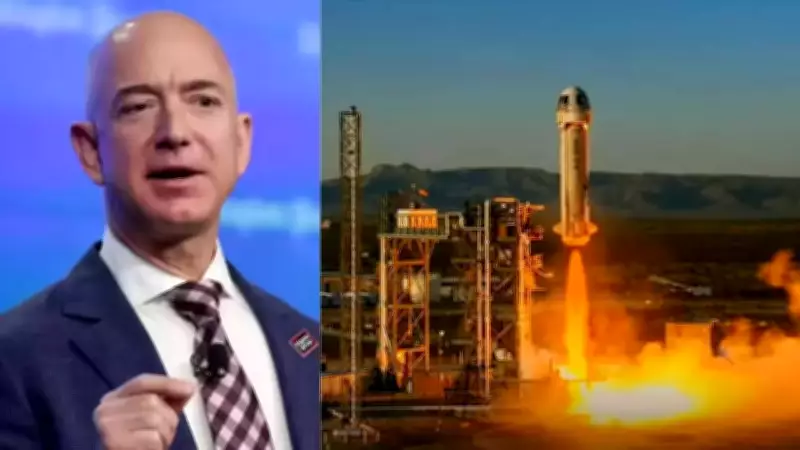
Blue Origin Grounds New Shepard Space Tourism, Pivots to Lunar Ambitions
For years, space tourism represented a burgeoning novelty that captivated global imagination. The experience offered a brief ascent, fleeting moments of weightlessness, and a breathtaking view of Earth witnessed by only a privileged few. Blue Origin's New Shepard rocket became an integral part of this narrative, transporting celebrities, billionaires, and select guests to the edge of space and back in short, headline-grabbing flights.
A Strategic Pause for Lunar Priorities
In a significant announcement, Blue Origin has declared it will halt flights of the New Shepard vehicle for a minimum of two years. The company explicitly stated its intention to reallocate focus and resources away from tourism initiatives. Instead, Blue Origin is directing its efforts toward an ambitious lunar agenda. This decision, while not entirely unexpected, signifies a subtle yet profound shift in the contemporary space exploration landscape.
Jeff Bezos played a pivotal role in inaugurating New Shepard's space tourism era. Since 2021, the rocket has conducted brief suborbital journeys lasting approximately ten minutes. These excursions did not achieve orbit or dock with the International Space Station but crossed the Kármán line, the internationally recognized boundary of space.

The Passenger Legacy and Ticket Mysteries
The passenger manifest included notable figures such as Jeff Bezos himself, actor William Shatner, NFL icon Michael Strahan, journalist Gayle King, and pop sensation Katy Perry. This eclectic mix underscored the program's objective: to make space momentarily accessible beyond the traditional astronaut cadre.
In total, 98 individuals have flown aboard New Shepard. Blue Origin has never publicly disclosed ticket prices, though industry estimates suggest costs ran into hundreds of thousands of dollars per seat. For a period, it appeared these flights would continue regularly. However, in a Friday statement, Blue Origin confirmed the pause, explaining it aims to "shift resources to further accelerate development of the company's human lunar capabilities."
NASA's Artemis Program and Geopolitical Pressures
Blue Origin holds one of two NASA contracts to develop a lunar lander capable of transporting astronauts from orbit to the Moon's surface, with SpaceX being the other contractor. NASA's Artemis program seeks to return humans to the Moon for the first time since the Apollo missions. Artemis III, which includes a planned lunar landing, is currently scheduled for 2028.
The suspension also reflects mounting political and geopolitical pressures. U.S. lawmakers increasingly frame lunar missions as part of a broader strategic competition, particularly with China, which aims to land its astronauts on the Moon by 2030.
Uncertain Future for Space Tourists
A pressing question remains regarding individuals who have already purchased tickets. Blue Origin has not disclosed how many prospective passengers are affected or outlined the next steps for them. Currently, space tourism via New Shepard is effectively grounded, leaving the future of commercial suborbital flights uncertain.
This strategic redirection marks a critical juncture for Blue Origin, emphasizing long-term lunar exploration over short-term tourism ventures, and reshaping the trajectory of private spaceflight endeavors.






