

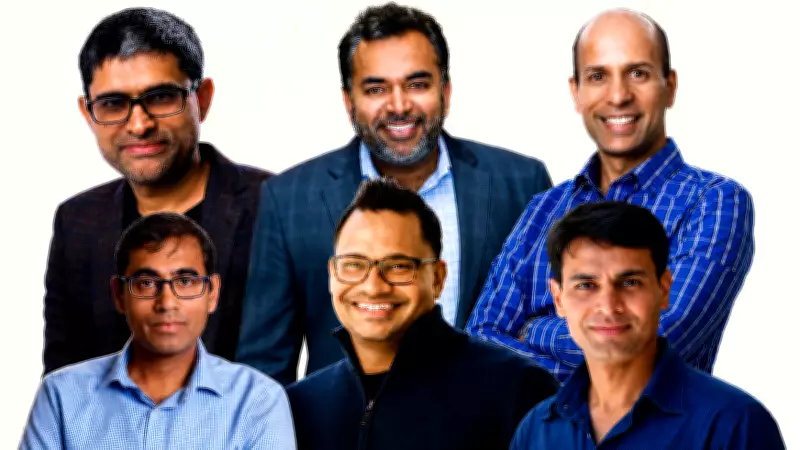
For years, the Indian success story in America followed a familiar script: bright students, college degrees, H-1B visas, green cards, Silicon Valley jobs, corner offices. Indians were seen as the talent pool behind America's technology boom — the coders, doctors, researchers, managers and CEOs who helped run its companies.
A New Narrative Emerges
That story has changed. Today, Indian-Americans are not just employees but founders and builders of some of the most valuable startups in the United States. According to recent data, Indian-American entrepreneurs have played a pivotal role in creating 96 unicorns — privately held startups valued at over $1 billion — across the country. This marks a significant shift from the earlier perception of Indians as primarily a source of skilled labor.
From Employees to Entrepreneurs
The journey from Silicon Valley jobs to building unicorns reflects a broader transformation within the community. Many Indian-Americans who once climbed the corporate ladder are now leveraging their experience, networks, and capital to launch their own ventures. Sectors such as technology, healthcare, finance, and e-commerce have seen a surge in Indian-American-founded startups. Notable examples include companies like Zoom, founded by Eric Yuan, and Instacart, co-founded by Apoorva Mehta, which have become household names.

This entrepreneurial wave is fueled by several factors. First, the strong educational background of Indian-Americans, with many holding advanced degrees in STEM fields, provides a solid foundation for innovation. Second, the community's deep ties to both India and the US enable cross-border collaborations and access to diverse markets. Third, a growing ecosystem of Indian-American venture capitalists and angel investors is actively funding the next generation of founders.
Impact on the US Economy
The rise of Indian-American unicorns has a substantial impact on the US economy. These startups create thousands of jobs, drive technological advancements, and contribute to economic growth. According to a study by the National Foundation for American Policy, Indian immigrants have founded or co-founded nearly one-third of all US unicorns. This statistic underscores the community's outsized role in America's innovation landscape.
Challenges and Opportunities
Despite the success, Indian-American entrepreneurs face challenges, including visa hurdles for themselves and their employees, cultural biases, and intense competition. However, the community's resilience and adaptability have enabled them to overcome these obstacles. As more Indian-Americans achieve success, they inspire others to follow suit, creating a virtuous cycle of entrepreneurship.
In conclusion, the Indian-American story has evolved from one of assimilation and employment to one of leadership and creation. With 96 unicorns and counting, Indian-Americans are not just participants in the American dream — they are its architects.






