

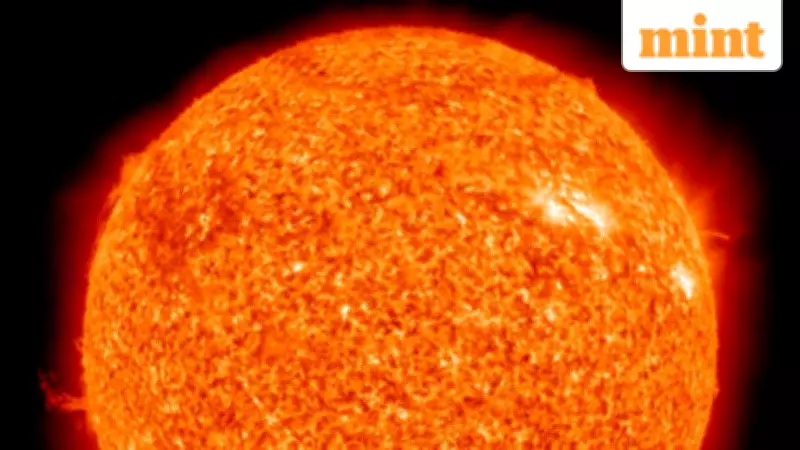
Solar Fury Unleashed: Sun Records Most Powerful Eruption of 2026
In a spectacular display of cosmic power, our Sun has unleashed an extraordinary burst of activity over the past 24 hours, firing at least 18 M-class solar flares alongside three formidable X-class eruptions. The most remarkable event in this solar tempest was an X8.3 flare, now officially recorded as the strongest solar eruption witnessed so far in the year 2026.
Decoding Solar Flare Intensity and Classification
Solar flares represent sudden, explosive releases of magnetic energy from the Sun's turbulent surface. Scientists systematically categorize these events based on their strength using a precise alphabetical scale:
- A, B, and C-class flares: Representing the lower end of the energy spectrum
- M-class flares: Signifying moderate intensity events
- X-class flares: Marking the most extreme solar eruptions
Each progressive category indicates a tenfold increase in energy output, placing X-class flares at the absolute pinnacle of solar activity. According to NASA observations, an X8.3 flare like the one recently recorded ranks among the most extreme solar phenomena ever documented.

Sunspot 4366: The Epicenter of Solar Turmoil
The source of this heightened solar activity has been traced to a rapidly expanding sunspot designated as region 4366. Over recent days, this solar feature has undergone dramatic growth while exhibiting increasingly unstable magnetic behavior, transforming it into a prime candidate for generating major solar eruptions.
Radio Blackouts and Atmospheric Disruption
The most powerful X8.3 flare reached its peak intensity at 6:57 pm EST on February 1, releasing an intense barrage of ultraviolet and X-ray radiation. This radiation surge significantly disrupted the upper layers of Earth's atmosphere, triggering R3-level radio blackouts across substantial portions of the South Pacific region.
According to detailed reports from the US National Oceanic and Atmospheric Administration's Space Weather Prediction Center, shortwave radio communications experienced notable interference in:
- Eastern Australia
- New Zealand
Potential Geomagnetic Impacts and Auroral Activity
Space scientists are maintaining vigilant observation to determine whether these powerful flares are associated with coronal mass ejections (CMEs). Preliminary assessments suggest that most material from the X8.3 flare will likely bypass Earth, though researchers cannot completely rule out a minor impact around February 5.
Should any solar material interact with Earth's magnetic field, it could temporarily elevate geomagnetic activity while significantly enhancing the probability of spectacular auroral displays at higher latitudes.
Continued Solar Activity Expected
Sunspot 4366 remains in a highly active state and is gradually rotating into a more Earth-facing position. Space weather forecasters have issued warnings that additional solar flares originating from this volatile region are probable in the coming days, suggesting that this period of heightened solar activity may continue.
This extraordinary solar event serves as a powerful reminder of our Sun's dynamic nature and its capacity to influence technological systems on Earth, while simultaneously creating breathtaking natural phenomena in our planet's upper atmosphere.






