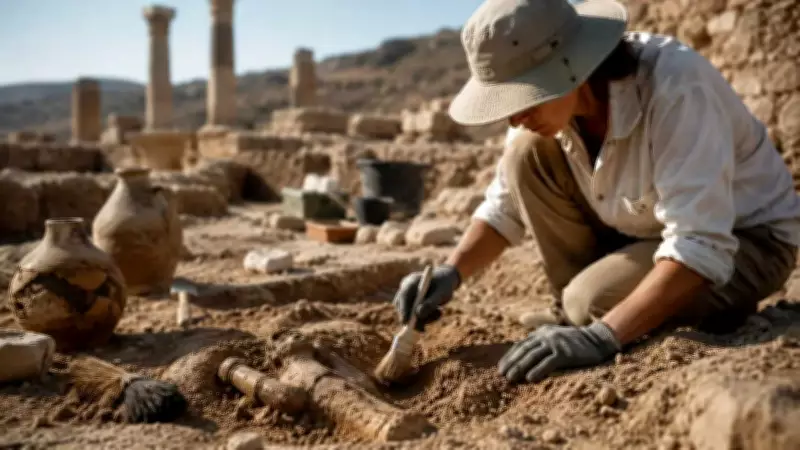
Human history often appears straightforward in textbooks, presenting a neat timeline of progress from simple tools to complex cities. However, archaeology continues to disrupt this narrative slowly and quietly, and sometimes suddenly. A buried temple older than farming itself, a lost city emerging from the jungle, or a tomb untouched for millennia opening like a sealed time capsule—these discoveries do not merely add facts. The greatest archaeological finds are significant not only for their contents but for what they suggest: that ancient humans may have been far more advanced, organized, and symbolic than earlier theories allowed. Experts acknowledge that the record is incomplete, and those missing pieces of history still lie underground, waiting to be unearthed.
Göbekli Tepe – A Temple Before Civilization
Göbekli Tepe, located in southeastern Turkey, is often described as one of the most disruptive archaeological finds ever made. Estimated to be over 11,000 years old, this site features massive T-shaped stone pillars arranged in circular formations, many carved with detailed animal figures such as snakes, foxes, lions, and scorpions. The scale of construction is immense, with some stones weighing several tons, requiring organized labor and planning—yet it appears to have been built before agriculture was fully established in the region. Experts still debate its purpose, with suggestions ranging from ritual gatherings to seasonal meeting points. What stands out is the implication that symbolic thinking and large-scale coordination existed much earlier than expected, unsettling the traditional timeline of human development.
Pompeii – A City Paused in a Single Moment
Pompeii feels almost unreal when described: a Roman city frozen in time after the eruption of Mount Vesuvius in A.D. 79. Ash, gas, and volcanic debris buried everything in hours, preserving streets, houses, and even human forms in striking detail. Walking through Pompeii today feels like stepping into a paused civilization. Bread still sits in ovens, wall paintings remain visible, and shops look almost ready to reopen. It is rare for archaeology to preserve not just structures but moments. Experts say Pompeii offers one of the most complete snapshots of Roman daily life ever found, yet it also serves as a reminder of how quickly a functioning society can disappear. There is something unsettling about how ordinary everything looks, as if life simply stopped mid-action and never resumed.

The Dead Sea Scrolls – Fragile Texts That Survived Time
The Dead Sea Scrolls were discovered in caves near Qumran, close to the Dead Sea. These documents contain religious texts, ancient biblical manuscripts, and secular community documents dating from the 3rd century BC to the 1st century AD. Their importance lies in their age and condition; most were written on parchment and papyrus, substances that degrade rapidly, but the dry desert climate preserved them for almost two millennia. It is believed the documents were buried intentionally, possibly due to conflict, to save them from destruction. The scrolls provide early versions of Hebrew scriptures and insights into the evolution of religious documents, though some portions remain undeciphered or incomplete, leaving aspects of the story missing.
Terracotta Army – An Emperor’s Underground World
In 1974, farmers near Xi’an, China, uncovered fragments of clay figures, leading to the discovery of the Terracotta Army. Thousands of life-sized soldiers, horses, and chariots were buried near the tomb of China’s first emperor, Qin Shi Huang. Each figure has unique facial features, hairstyles, and expressions, creating an almost real army preserved in clay. The purpose is generally believed to be protection in the afterlife, reflecting ancient Chinese beliefs about life after death, especially for rulers. The scale of the project suggests enormous coordination and labor, possibly involving hundreds of thousands of workers. Excavation continues today, with some pits still untouched, and researchers expect more discoveries underground.

Machu Picchu – The City in the Clouds
Machu Picchu, located in the Andes mountains, was constructed by the Inca civilization and later abandoned, possibly after the Spanish conquest and the introduction of diseases. The site consists of temples, agricultural terraces, and stone roads built with impressive engineering skills. Stones are fitted so precisely that they require no mortar, a technique that confuses engineers even today, indicating mastery of architecture and landscape engineering. Archaeologists remain uncertain about its purpose; some argue it was used for royalty, while others claim it was a religious site. Given its location among mountains and clouds, it likely held symbolic importance.
Tikal – A Jungle Empire Rediscovered
Deep in Guatemala’s rainforest lies Tikal, once a major city of the Maya civilization. Built over centuries, it was eventually abandoned around the 10th century. When rediscovered, it was almost entirely covered by dense jungle, with giant pyramids rising above trees like natural hills. Excavations revealed plazas, temples, inscriptions, and astronomical records. The Maya were highly advanced in mathematics, astronomy, and writing systems, and Tikal reflects that complexity. Yet the reason for its decline is still debated, with environmental stress, warfare, and political instability all considered possible factors.
Tutankhamun’s Tomb – A Royal Time Capsule
The discovery of Tutankhamun’s tomb in 1922 is one of archaeology’s most famous moments. The tomb belonged to a young Egyptian pharaoh who died in his late teens and was largely intact, unlike many others. Gold masks, jewelry, chariots, and everyday objects filled the burial chamber, providing an unmatched look into ancient Egyptian beliefs about death and the afterlife. Experts still debate aspects of Tutankhamun’s life and death, with theories ranging from illness to injuries or genetic conditions. The tomb remains a key source of information about royal burial practices in ancient Egypt.
Stonehenge – A Stone Mystery That Refuses Answers
Stonehenge, one of the most studied prehistoric monuments, consists of large stones transported from distant locations and arranged in a circular pattern. The effort required was extraordinary; without modern tools or wheels, ancient builders moved and positioned massive stones weighing several tons. Its purpose is still unclear, with theories suggesting astronomical alignment with solstices, burial, or ceremonial uses. No written records exist, so interpretation relies entirely on archaeology and speculation. Stonehenge continues to attract researchers and visitors, each trying to understand its meaning.
Angkor Wat – A City of Temples
Angkor Wat is one of the largest religious buildings ever constructed. Built in the 12th century, it initially served as a temple dedicated to the Hindu god Vishnu and is now used by Buddhists. It occupies a vast territory with towers, passages, and sculptures illustrating various aspects of life. Some scholars consider Angkor Wat not just a temple but a city. Its architectural merits continue to attract experts interested in construction techniques.
Derinkuyu – The Underground City
Derinkuyu Underground City is a vast subterranean settlement discovered in the 1960s. It contains multiple levels of tunnels, rooms, storage areas, and ventilation systems. It may have been used as a refuge during invasions, with some estimates suggesting it could shelter thousands of people. The engineering behind its ventilation and structure is still studied today. What makes it remarkable is its accidental discovery: a homeowner reportedly found it after breaking through a wall in his basement.
Petra – The Carved City in Stone
Petra is famous for its rock-cut architecture. The Nabataeans carved temples, tombs, and buildings directly into sandstone cliffs. It was once a major trading hub connecting different regions, and the civilization developed advanced water management systems to survive in a desert environment. After centuries of decline, Petra was largely forgotten by the outside world until its rediscovery in the 19th century.