

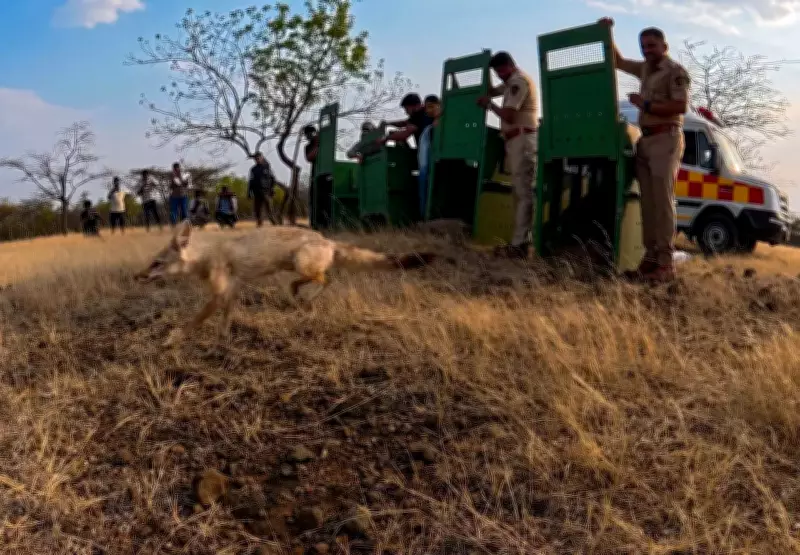
Nearly two months after five Indian foxes were rescued from an alleged wildlife trafficking operation in Nandurbar district, four of them have been successfully rehabilitated and released back into the wild.
Details of the Rescue Operation
The foxes were among the animals recovered when a joint team of the Nandurbar police and forest department intercepted a tempo on NH-53 near Navapur in April. Hidden beneath crates of vegetables, the foxes were allegedly being transported to Gujarat as part of an illegal wildlife trade network. The seizure led to the arrest of three individuals and the rescue of hundreds of birds and other wildlife.
Rehabilitation Process
Following the rescue, the foxes were transferred by the Nandurbar forest department to the Wildlife Transit Treatment Centre (TTC) operated by Pune-based RESQ Charitable Trust for treatment and rehabilitation. Neha Panchamiya, founder of RESQ Charitable Trust, stated that the animals arrived in poor condition after their time in captivity. Stress and disease, predictable consequences of housing wild canids in captivity, were evident upon their arrival. A detailed health assessment was followed by structured rehabilitation. One fox did not survive, but the remaining four completed all rehabilitation milestones and cleared all health checks. They recovered sufficiently for release and were returned to the wild.

Legal and Environmental Impact
The Nandurbar forest department secured the court order for their release, and as per directions from the chief wildlife warden, the foxes were reintroduced into a safe and protected wildlife habitat. The release marks the final chapter in a case that highlighted the continued threat posed by wildlife trafficking in Maharashtra. Wildlife rescuers noted that the successful return of the four foxes to their natural habitat was made possible through coordinated efforts between enforcement agencies, forest officials, veterinarians, and rehabilitation teams, although one of the animals unfortunately fell prey to the stress caused by the illegal activity.






