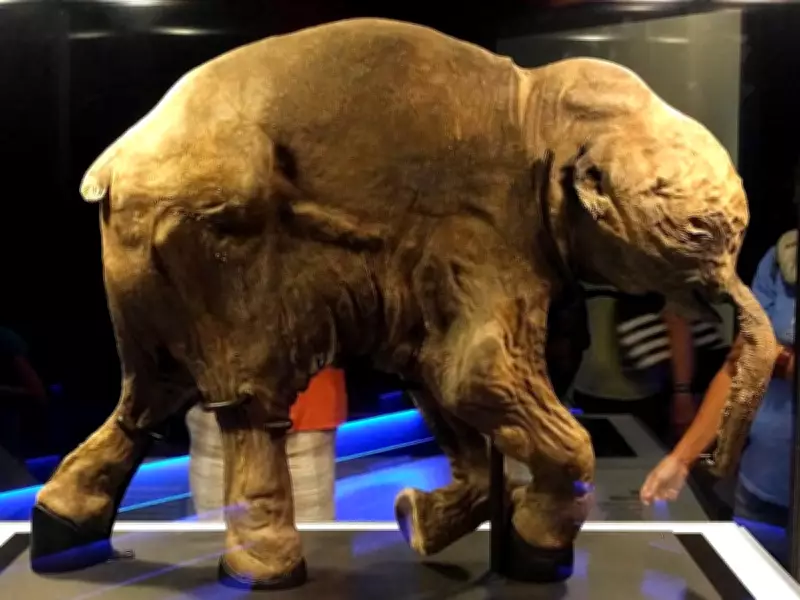
On a routine day in May 2007, the Siberian tundra witnessed a landmark event in paleontological research. A group of nomadic Nenets herders, including a father and his children, stumbled upon the carcass of an intact baby woolly mammoth on the eroding banks of a river in northwest Siberia. This mammoth, now known as Lyuba, had been encased in permafrost for approximately 42,000 years, preserved in a remarkably pristine state that made it appear as though she was merely asleep in her frozen cocoon.
A Chance Discovery Becomes a Scientific Treasure
What began as a chance find on the tundra quickly transformed into a scientific treasure. Lyuba's body provided a rare and detailed record of Ice Age life that single bones or tusks could never offer. Her skin, internal organs, and soft tissues allowed researchers to learn more about how mammoth calves grew and lived in the harsh, cold environment of the past era. The discovery did not involve modern scientific labs or carefully planned expeditions; it was a natural process on the riverbank that gradually revealed the remains as the frost gave way to thawing conditions.
The initial discovery by local herders underscores the deep connection between Siberian nomads and their environment. Since the remains were found on an active riverbank, time became a critical factor. Thawing and melting snow could quickly destroy any unprotected remains, making the timely recovery essential.

International Sensation and Scientific Analysis
Upon discovery, Lyuba became an immediate international sensation due to her outstanding preservation. University of Michigan scientists analyzed Lyuba's tissue using accelerator mass spectrometry, dating her body to the late Ice Age, around 42,000 years ago. This analysis confirmed cutting-edge techniques in the field. Lyuba's complete state and preserved age were instrumental in validating these methods. The preservation of soft tissues in such a specimen is an exceptional exception to typical fossil rules, offering a unique window into the past.
Lyuba's Unique Features
Typically, we learn about ancient mammals from fragmented remains like petrified bones, large teeth, or ivory. However, Lyuba offered scientists much more: her soft tissues, internal anatomy, and general physical condition could be studied in detail. This opened up a whole new range of questions about the Ice Age and its fauna. As highlighted in an article published in Nature, the preservation value of well-kept ancient skins and tissues is extremely important for evolutionary studies, even long after the initial discovery. Lyuba's body became an intermediary to the past, with permafrost serving as a natural freezer that inhibited biological decay, providing an eternal point of reference for studying mammoths.
Permafrost as Natural Archival Storage
The permafrost zone acts as a natural archival storage for ancient biological samples, preserving organic remains until scientists uncover them. This natural preservation process allows paleontology to occasionally study the physical appearance, skin texture, and inner organs of extinct mammals, rather than relying solely on bones and other hard parts. However, due to climate change, this natural archive is becoming more sensitive to environmental changes. Lyuba's transformation from an artifact on a frozen riverbank to a museum display has improved the standards of questions that can be answered about early ecosystems. Thanks to her well-preserved body, scientists obtained information about the growth process and general well-being of these creatures, contributing valuable knowledge about how they adapted to their environment. Even many years after her discovery, Lyuba serves as a powerful symbol of the mysteries still hidden in the depths of the earth.
About the Author
The TOI Science Desk is an inquisitive team of journalists dedicated to exploring the realms of discovery and curating captivating science news for The Times of India readers. They aim to be your scientific companion, delivering daily doses of wonder and enlightenment, covering topics from genetic engineering to space exploration and artificial intelligence. The team is committed to demystifying science and making it accessible to all readers.