

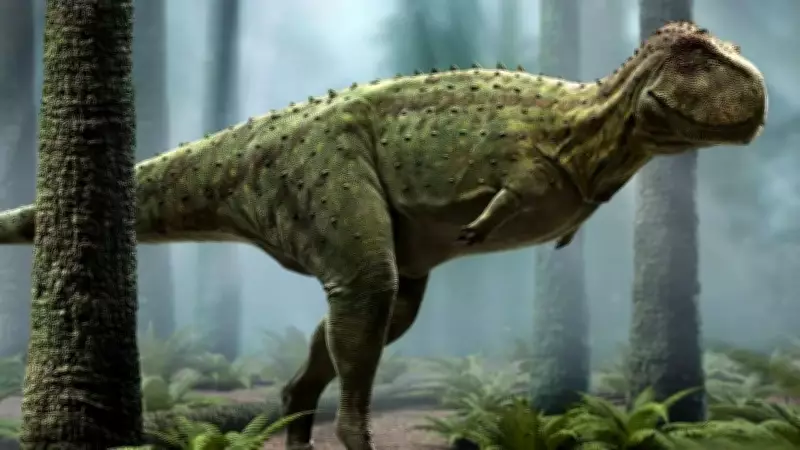
Millions of years before modern cities and forests existed, massive dinosaurs roamed the Indian subcontinent. While India may not be the first country associated with dinosaurs, its prehistoric past is remarkably rich. Fossils unearthed in Gujarat, Madhya Pradesh, Maharashtra, and Telangana reveal a diverse array of large meat-eaters and plant-eaters from the Jurassic and Cretaceous periods. These discoveries have significantly advanced the understanding of dinosaur evolution in the ancient supercontinent Gondwana. Here are five fascinating dinosaurs that once called India home.
Rajasaurus – The 'Royal Lizard' Predator
One of India's most famous dinosaurs is Rajasaurus, whose name translates to "royal lizard." This carnivorous species lived approximately 67 million years ago, with fossils found in Gujarat. It was likely the apex predator in its environment, distinguished by a horn-like protrusion on its head that set it apart from other theropods.
Barapasaurus – A Giant Long-Necked Herbivore
Barapasaurus, meaning "big-legged lizard," was a massive herbivore with an extraordinarily long neck. Fossils discovered in Telangana indicate it lived during the early Jurassic period and could reach lengths of over 14 meters. Its large limbs supported its enormous body as it fed on vegetation.

Isisaurus – The Giant Herbivore
Originally named Titanosaurus colberti, Isisaurus was a titanosaur with a massive body and long neck. Fossils from India show that it survived until near the end of the dinosaur era. Unlike other titanosaurs, Isisaurus had an upright neck structure, making it unique among its relatives.
Indosuchus – The Mysterious Meat-Eater
Indosuchus was a powerful carnivorous dinosaur from the late Cretaceous period, known from limited fossils found in India. Due to scarce remains, much about this predator remains a mystery. However, it is believed to have been a formidable hunter in its ecosystem.
Jainosaurus – A Titanosaur Giant
Jainosaurus was a herbivorous titanosaur discovered in Madhya Pradesh, characterized by its large neck. Like other titanosaurs, it roamed in search of vegetation. Its fossils contribute to the understanding of titanosaur diversity in India.
These discoveries highlight India's significant role in the story of dinosaur evolution. As paleontological research continues, new findings may further illuminate the lives of these ancient giants.






