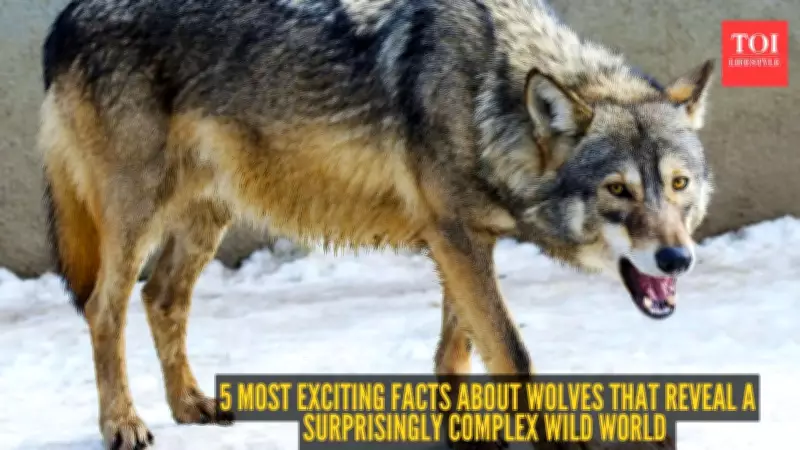
Wolves have spent centuries living inside human imagination – sometimes as villains in fairy tales, sometimes as symbols of wild freedom. But the real animal is far more layered than the stories we tell about it.
Behind the howls and forest legends, wolves live in a world built on family, coordination, and surprising emotional depth. Here are five facts that make them a lot more interesting than their reputation suggests.
Wolf Packs Are Basically Families, Not Power Struggles
We often hear about strict alpha-driven packs, but in the wild, it is usually much simpler. A typical wolf group is just a family – parents and their pups, sometimes older offspring who have not left yet. Instead of constant dominance fights, survival depends more on cooperation than competition. It is less a battlefield, more a household trying to make it through the wild.

Their Communication System Is Far More Than Just Howling
A wolf's howl gets all the attention, but it is only part of the conversation. Wolves also communicate through posture, eye contact, tail movement, and subtle body shifts. Even silence carries meaning in their world. The howl itself works like a long-distance signal, but in close range, it is a full visual language playing out quietly.
A Single Howl Can Travel for Kilometers
When a wolf howls, it is not just noise – it is reach. Depending on wind and terrain, the sound can carry several kilometers across forests and valleys. That is how separated members of a group reconnect or warn others without ever meeting face to face. It is one of nature's simplest long-range communication tools.
Wolves Quietly Shape Entire Ecosystems
Wolves do not just exist in the food chain – they influence everything around it. By keeping herbivore populations like deer in check, they indirectly protect vegetation, rivers, and soil health. In places where wolves disappeared, ecosystems often shifted in unexpected ways, with overgrazing becoming a real issue. Their presence creates balance, even when they are not visibly active.
Wolves Can Travel Very Long Distances
Wolves do not stay in one small area. In a single night, they can walk or run many kilometers while looking for food or following their group. Their movement is planned and focused, not random. This helps them survive in forests, mountains, and cold regions where food is not always easy to find.