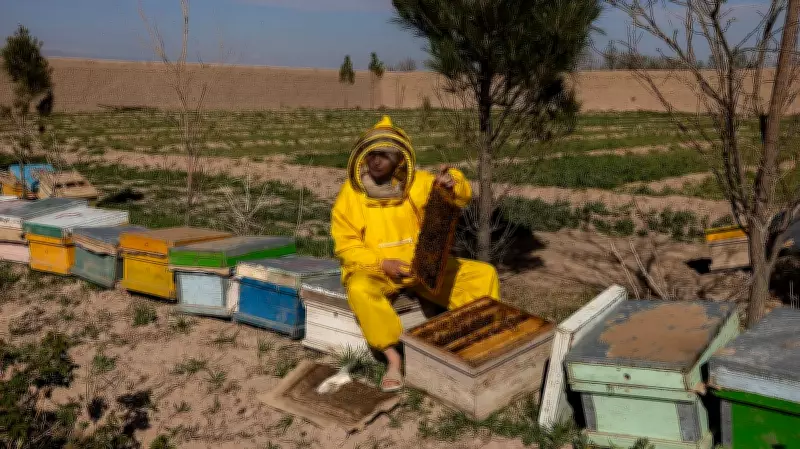
Thousands of Afghan women have turned to entrepreneurship as the only viable path to earn money and sustain a social life, following Taliban restrictions that have shut them out of secondary education and most jobs, according to a report by the International New York Times.
Entrepreneurship as a lifeline
Women across Afghanistan are launching small businesses, from bakeries and tailoring shops to beekeeping and handicraft cooperatives. In Herat province, for example, a group of women started a beekeeping venture producing honey for local markets. 'We had no other option. Schools are closed for us, and we cannot work in government offices. This is our only way to survive,' said Fatima, a 24-year-old entrepreneur who asked to use only her first name for safety reasons.
Social and economic impact
These businesses provide not just income but also a sense of purpose and community. Many women report that their ventures have become spaces for social interaction, networking, and mutual support. According to the report, an estimated 70% of women in urban areas have considered or started a home-based business since the Taliban takeover in August 2021. The trend is most pronounced in cities like Kabul, Herat, and Mazar-i-Sharif, where women have greater access to markets and raw materials.

Challenges and risks
Despite their determination, female entrepreneurs face significant hurdles. The Taliban's Ministry for the Propagation of Virtue and the Prevention of Vice has imposed strict guidelines on women's public presence, requiring them to be accompanied by a male guardian and to cover fully. Some women operate their businesses from home to avoid scrutiny. Others rely on male relatives to handle transactions in public markets. 'We are always afraid that our shop could be shut down, or we could be harassed,' said Laila, a tailor in Kabul who employs five women.
International response
The international community has taken note of the trend. Several NGOs and UN agencies have launched programs to provide microgrants and training for Afghan women entrepreneurs. The UN Development Programme reported in 2025 that over 15,000 women had received support for small businesses, though demand far outstrips supply. 'Afghan women are showing incredible resilience and creativity in the face of systemic oppression,' said a UNDP spokesperson.
Future outlook
As the Taliban government continues to enforce its interpretation of Islamic law, women's economic participation remains precarious. However, the entrepreneurial movement is growing, with women increasingly using social media to market products and connect with customers. Some hope that economic necessity will eventually force the Taliban to relax restrictions. For now, these women are carving out spaces of independence and agency, one business at a time.