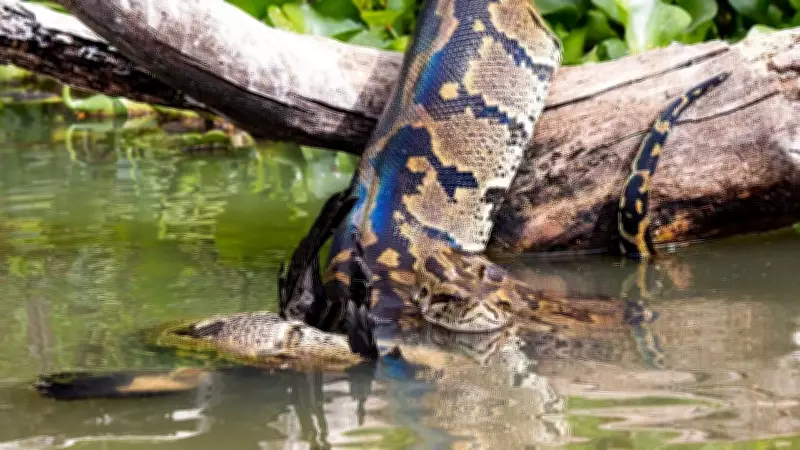
The African rock python is not a snake that often dominates headlines, yet it remains one of the most impressive reptiles found anywhere in Africa. Stretching across much of sub-Saharan Africa, this giant constrictor occupies an extraordinary variety of landscapes, from marshes and floodplains to forests, savannas, and rocky grasslands. According to WorldAtlas, Python sebae is the largest native snake on the continent and ranks among the heaviest snake species in the world. Unlike venomous snakes that rely on toxins to subdue prey, the African rock python depends on patience, camouflage, and immense muscular strength. Its size alone commands attention, but its role as a top predator makes it an equally important part of the ecosystems it inhabits.
African Rock Python Size and Physical Characteristics
At first glance, the African rock python looks built for strength. Adults commonly reach between 10 and 16 feet in length, though some exceptional specimens grow considerably larger. Females are often bigger than males, carrying thicker bodies and greater mass. Brown, tan, and olive markings run across the snake's scales in irregular patterns, helping it disappear into dry grass, riverbanks, and woodland undergrowth. A dark spear-shaped marking on the head is one of its most recognizable features. According to WorldAtlas, the species also possesses heat-sensitive pits around the lips that help it locate warm-blooded prey.
African Rock Python Habitat Across Sub-Saharan Africa
Water shapes much of the python's world. WorldAtlas notes that the species is frequently associated with rivers, marshes, lakes, and floodplains, where prey is abundant and shelter is easy to find. Strong swimming abilities allow these snakes to move comfortably through aquatic environments and cross waterways when necessary. During the hottest hours of the day, they often retreat into burrows, rocky crevices, or dense vegetation. These hiding places protect them from extreme temperatures and potential threats.

African Rock Python Diet and Hunting Behavior
Unlike venomous snakes that rely on toxins, the African rock python depends on patience and muscle. It often remains motionless for long periods beside animal trails or watering points before launching a sudden attack. Younger individuals mainly feed on rodents, birds, and small reptiles, while large adults can overpower animals as substantial as antelope, warthogs, and monkeys. Once prey is seized, the snake coils tightly around it and kills through constriction before swallowing it whole.
African Rock Python Reproduction and Life Cycle
For much of the year, African rock pythons live alone. Breeding brings brief interaction, after which females lay clutches that may contain dozens of eggs. One unusual aspect of the species is its level of parental care. As reported, females remain with their eggs throughout incubation, coiling around them until the young emerge. Once hatched, however, the offspring must fend for themselves almost immediately.
Protecting Africa's Largest Native Snake
Despite its size, the African rock python faces growing challenges. Habitat loss, expanding agriculture, and conflict with people continue to affect populations across parts of its range. Hunting for skins, meat, and trade has added further pressure in some areas. According to WorldAtlas, the species is currently listed as Near Threatened. Protected wetlands, wildlife reserves, and conservation programs remain important for ensuring that Africa's largest native snake continues to survive in the wild.