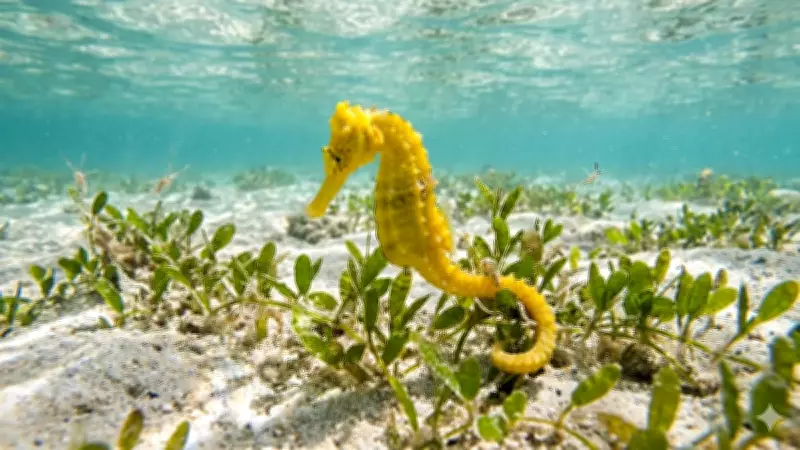
The Bombay Natural History Society (BNHS), in collaboration with the Mangrove Cell of the Forest Department, successfully rescued three seahorses from the Mirya, Kadbadevi, and Shirgaon creeks in Ratnagiri district. The operation took place recently as part of ongoing efforts to protect marine biodiversity along the Maharashtra coast.
Ghost Gear Threat
The rescued seahorses were found entangled in what is known as 'ghost gear'—abandoned, lost, or discarded fishing nets that continue to trap marine life. These nets, often made of synthetic materials, persist in the environment for years, causing injury and death to countless aquatic animals.
According to BNHS officials, the seahorses were in distress but were carefully freed and released back into their natural habitat after a health assessment. The team emphasized that ghost gear is a growing menace in coastal ecosystems, affecting not only seahorses but also turtles, dolphins, and other marine species.

Conservation Efforts
The BNHS has been actively involved in marine conservation along the Ratnagiri coast, which is known for its rich biodiversity. The society regularly conducts patrols and awareness programs to mitigate the impact of fishing debris. The Mangrove Cell has also stepped up monitoring of creeks and estuaries to prevent illegal dumping of nets.
This rescue operation underscores the importance of collaborative action between non-governmental organizations and government agencies to safeguard marine life. The BNHS urged local fishermen to report abandoned gear and adopt sustainable fishing practices to reduce such incidents.
The rescued seahorses belong to species commonly found in Indian coastal waters, though exact identification is pending. Seahorses are protected under the Wildlife Protection Act, and their trade is banned in India.