

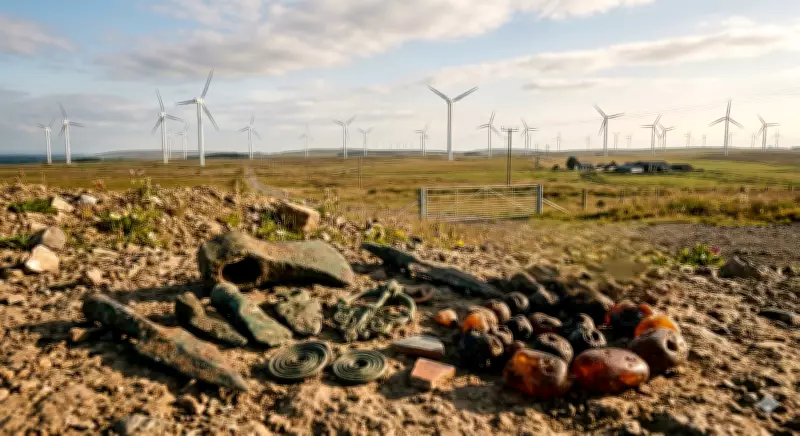
When striving for an energy source that is sustainable and futuristic, things tend to take a relatively clear-cut route at first glance. However, in the field in Wolfenbüttel, Germany, the present day came face-to-face with the ancient past.
For the men building the platform for the wind turbine, it was a regular workday. The machinery rumbled as it tore up the earth and settled it firmly down before the erection of the turbine. Among the dirt and rocks was the gleam of metal and the translucent shine that could only be described as ancient resin.
It turned out that what the group had discovered was not junk but a completely intact stockpile of treasures from the Bronze Age. It was an ancient jewelry hoard that survived for about 3,000 years since its burial. The construction was immediately suspended as archaeologists were called to document the find. This is not a pile of scattered jewelry; it is a well-buried cache of prestige objects that waited under the ground after the civilization had left the area. It is amazing how many tales of our past are buried just a couple of feet below our constructions.

The Secret Glitter of the Bronze Age
The extraction of the items was a challenging process that emphasized the exquisite workmanship of the Bronze Age artisans. As stated in the report Amber from No Man's Land issued by the Lower Saxony State Office for Monument Preservation, the hoard consists of high-quality bronze artifacts and unique amber beads. The collection includes intricate neck rings, elegant spiral bracelets, and numerous fancy pins. They were probably used as accessories for fixing thick wool clothes worn by the rich in the Bronze Age period.
The most intriguing thing about this find is the variety of materials found at the site. The artifacts made of bronze display an exquisite degree of technical skill, complete with intricate carvings and geometrical motifs that were popular at the turn of the first millennium BCE. It seems unlikely that this cache would have been casually thrown away, since the number of artifacts suggests an intentional act. According to archaeologists, these caches were probably buried as an offering to the gods or as a means of hiding wealth for future recovery.
An interesting element of the find was the amber, also known as the "gold of the North." According to the findings presented by the Lower Saxony State Office, the resin most likely originated from the coastline of the Baltic Sea, far away from its destination. This proves that even back then, Central Germany was an integral part of a highly developed network that spanned vast geographical areas. The ancient civilization was not isolated but integrated into the global economy, where expensive commodities traveled long distances to be enjoyed by the elites.
A Legacy Lying Subtly Below the Surface of the Earth
The items had retained an exceptional condition as a result of the peculiar composition of the soil found in Wolfenbüttel. The bronze items possessed an eye-catching green coloration, which acted as a barrier against any further corrosion. The amber objects, on the other hand, remained intact owing to the constant temperature that protected them from exposure to light and air. The discovery of such invaluable items for the present-day diggers was indeed awe-inspiring.
Today, the artifacts have been moved to specialized labs for cleaning and conservation. Researchers are using modern scanning technology to look for microscopic wear patterns on the jewelry, which can tell them if these items were worn daily or if they were created specifically for ceremonial use. The wind turbine project has since resumed, but with a new layer of historical significance added to its footprint. The field is no longer just a source of wind power; it is a recognized landmark of human history.

This observation emphasizes the emergence of a trend in modern construction. In the quest for sustainability in energy generation and housing development, the modern man increasingly tends to clash with the hidden remains of the past. This case from Wolfenbüttel illustrates that a proper marriage between construction activities and responsibility to preserve the past can ensure that history and the future coexist. From the perspective of the residents in the area, the bronze items and amber finds are a point of pride, a tangible reminder of the skilled artisans who lived here when European civilization was just getting started.
These glittering necklaces and amber beads not only reflect their use as accessories but also capture the essence of the latest technology and fashion trends from their time period. They symbolize the achievements, prestige, and craftsmanship of the society in which they were created. Although this society no longer exists, its impact remains forever. To put it simply, they reflect the creativity and craftsmanship of humans.





