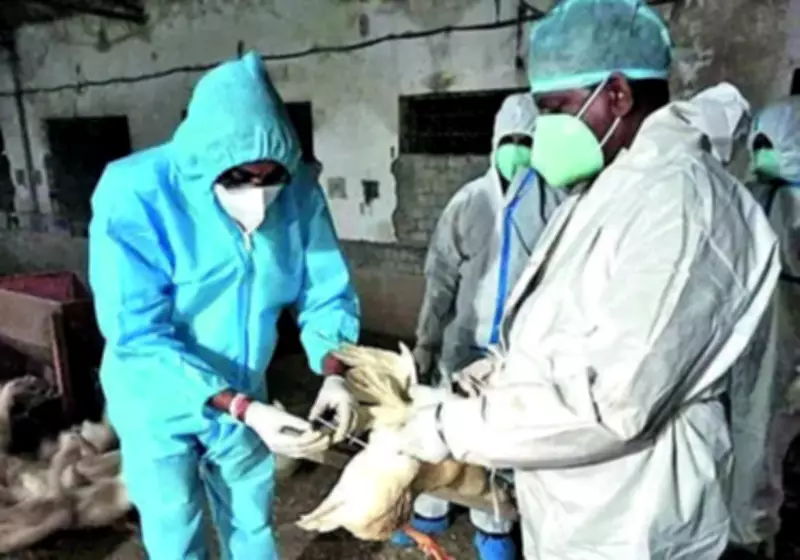
Central Team to Assess Avian Flu Situation in Nandurbar
A team of central government officials is scheduled to visit Nandurbar district in Maharashtra next week to review the ongoing avian influenza outbreak. This follows an extensive culling operation in Navapur taluka, where over 3 lakh birds from 15 infected farms have been destroyed in accordance with World Health Organization (WHO) protocols.
Impact on Navapur's Poultry Hub
Navapur, a key layer poultry hub in western Maharashtra, has been severely affected. This marks the third avian flu outbreak in the region, following earlier incidents in 2006 and 2021. The repeated crises have significantly weakened the local poultry industry, with the number of operational farms dropping from 60 in 2006 to just 38 at present.
Dr. Baburao Narawade, Regional Joint Commissioner of the Animal Husbandry Department, confirmed the upcoming visit. "Government of India officials are likely to visit Navapur next week to take stock of the situation and speak directly to the farmers," he said.

Urgent Need for Local Laboratory
Dr. Narawade stressed that recurrent outbreaks highlight the urgent need for a dedicated laboratory or research centre in Nandurbar or the wider north Maharashtra region for early disease detection. Currently, farmers must send samples to distant labs in Pune or Bhopal, while the Nashik facility lacks the capacity to test such viral infections.
"It has been 20 years, and three avian flu outbreaks have forced a section of people to move out of this business. However, many remain steadfast and ready to face these challenges," Dr. Narawade added, noting that the sector continues to provide critical local employment.
Navapur's Role in Egg Supply
Navapur, a tribal-dominated taluka, has been supplying eggs to western India since the 1950s. It houses around 12 lakh layer birds, producing nearly 10 lakh eggs daily. Over 80% of this output is transported to Surat, with the remainder catering to north Maharashtra.
Farmers argue that establishing a local laboratory in Navapur or upgrading the Nashik facility would reduce costs and delays, speed up diagnosis and research efforts, and strengthen biosafety awareness among producers and consumers alike.