

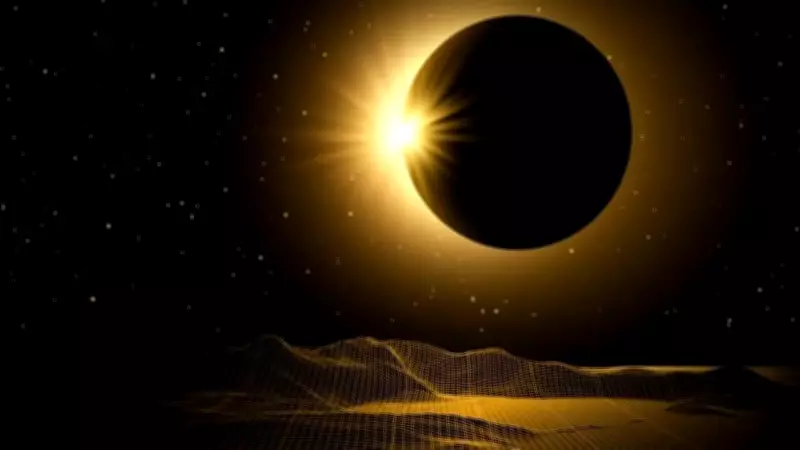
The century's longest solar eclipse of the year is set to take place on August 2, 2027. This rare celestial astronomical event will last for approximately 6 minutes and 23 seconds, offering a once-in-a-lifetime opportunity for skywatchers. A solar eclipse occurs when the Moon moves between the Sun and Earth, momentarily obstructing sunlight in certain areas of the planet.
Where Will This Longest Solar Eclipse Be Visible?
Skywatchers who wish to witness this rare total solar eclipse can travel to Spain, Morocco, Algeria, Libya, Egypt, and Saudi Arabia, among other nations, where the uncommon eclipse of 2027 will be visible. These regions will experience the full spectacle of the Moon completely obscuring the Sun, turning daytime into almost complete darkness.
The Longest Solar Eclipse of the Century in 2027
The world will witness the longest total solar eclipse of the twenty-first century that is viewable from land on August 2, 2027. This event could last up to 6 minutes and 23 seconds, making it a truly remarkable occurrence. During this rare event, the Moon will totally obscure the Sun, creating a dramatic shift from daylight to near darkness.

When Is the Annular Solar Eclipse 2026?
All astronomers and skywatchers will have the opportunity to witness an annular solar eclipse on Wednesday, August 12, 2026. After observing the first solar eclipse and lunar eclipse in February and March of that year, this will be the second solar eclipse of the year. Skywatchers are always excited to observe such celestial events, and this will be a great opportunity for all enthusiasts.
What Is the Annular Solar Eclipse 2026?
An annular solar eclipse occurs when the Moon obscures the center of the Sun, leaving the Sun's visible outer borders to form an annulus, or "ring of fire," around the Moon. This creates a striking visual effect that differs from a total eclipse.
Visibility of the Annular Solar Eclipse in 2026
This annular solar eclipse will be visible in several countries across Europe, including parts of Canada, Greenland, Iceland, the Arctic region, Northern Spain, the Atlantic Ocean, and the northeastern region of Russia. Observers in these areas will be able to see the ring of fire phenomenon.






