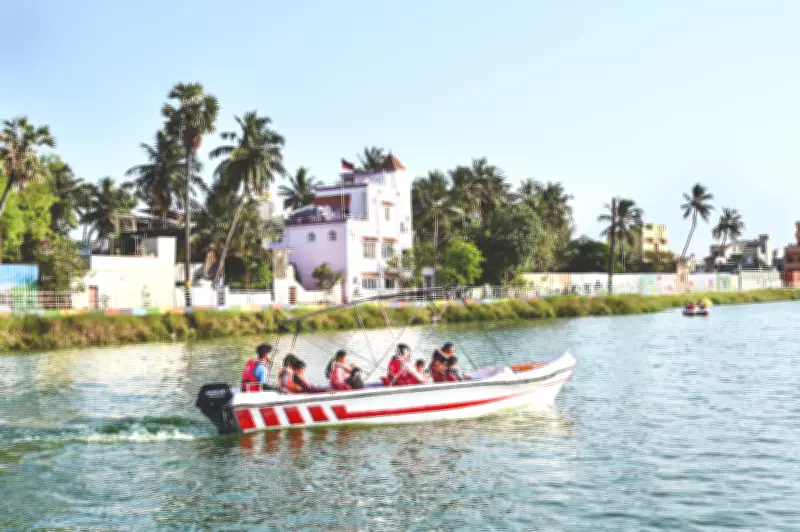
Chennai, a densely populated metro with limited large green and blue spaces, has progressively commodified many of its small public parks and open areas, transforming some into gaudy, manicured, ticketed amusement parks. Visitors must pay to enter and again buy tickets to access specific zones within. The central question before the C Joseph Vijay government is whether the city needs such commercialized walled gardens or free, walkable greens that are barrier-free and closer to their natural state.
Notable Parks Turned Gated
Several parks that became gated and priced after expensive, publicly funded conversions include the former Agri-Horticultural Society garden in Gemini, renamed Kalaignar Centenary Park, and the Chetpet lake under the fisheries department. These projects, typically costing around 25 crore rupees each, were dressed up at taxpayer expense.
Guindy Eco Park
Various agencies are working on the 118-acre Guindy Eco Park, located on the former Race Course grounds, aiming to create a vast open area of lakes and walkways. The first phase is set to be completed by October. Car parking is included in the planning, but bus routes to connect the site have not been established.

Impact on Pre-existing Green Spaces
In parallel with these expensive restorations, civic projects have taken a toll on pre-existing inner-city green spaces due to the absence of a conservation plan. The Chennai Metro Rail system, part of green mobility initiatives, encroached upon Panagal Park in the heart of T Nagar and Ashok Nagar park. Many smaller parks, the size of buttons and free to enter, are bursting at the seams due to population pressure. The Miyawaki forest system, which forces densely planted tall saplings to grow vertically faster than conventional methods, was tried by the Greater Chennai Corporation in 2020, but its false promise soon became evident.
Urban Greening Policy
A third dimension is the state government's urban greening policy, which aims to promote green cover and ensure it is available to all sections of the public, with particular emphasis on low-income neighborhoods. The policy covers several types of land use, including parks, roadside avenues, urban forests, wetlands, industrial and institutional campuses, and residential areas. Intensifying population pressure and densification, officially projected to make 67% of the state urban by 2031, raises the question of whether the state can walk the talk on urban greening.
Previous Government Initiatives
Many public projects undertaken during the erstwhile DMK regime focused on building green and blue infrastructure, following an impoverishing phase in which wetlands and marshes were lost in Chennai, headlined by the encroachment of the Pallikaranai marsh. Sponge parks were announced after successive years of flood, reaching a peak in 2021. Eco parks named after former chief minister C N Annadurai and late scientist M S Swaminathan were opened in suburban Porur at considerable expense.
Philosophical Shift
Tamil Nadu has historically approached recreational commons with socialist democratic credentials, rather than the neoliberal idea of collecting rents from parks, lakesides, and gardens through ticketing. The late M Karunanidhi, who steered the state for a long time, was an ardent socialist; his ideas were reflected in policies like bus nationalization. Ironically, the centenary park created in his name in the heart of the city carved up a wooded area into an amusement center, charging heavily per enclosure or ride. It opened with an aviary of exotic birds such as South American macaws and parrots. An average visitor would need to budget a few hundred rupees to experience the 'park'. Can the average citizen in urban Tamil Nadu expect a philosophy that keeps public-owned lands and beaches truly free? Amusement parks may find a niche elsewhere, but should they come at the cost of wooded parks and walking areas, especially in a city that has only one contiguous green expanse—the Guindy National Park, Lok Bhavan and IIT, and a smaller Theosophical Society garden—all of which have entry barriers?

Accessibility for People with Disabilities
People with disabilities also demand access. All parks should have ground-level equipment and basic accessibility via ramps, so they do not have to go to isolated facilities such as Santhome, Nolambur, or Kotturpuram. Their demands lost traction in the run-up to the election.
Conclusion
Only free access to nature is consistent with democracy. Even where the government imposes expensive interventions necessitating an entry fee for maintenance, as in a good museum or conservatory, the norm is to make it free for students and seniors always, and for everyone on specified days of the week. This advances equity. Kitschy manicuring of parks and natural spaces to open the door to commerce cannot be considered a green measure.
Examples of Ticketed Parks
- Tholkappia Poonga: Upgraded into a biodiversity park with 42 crore rupees in public spending. The space became a controversial ticketed enclave with restricted access.
- Villivakkam Lake Eco Park: Set to join Chennai's growing list of ticketed green spaces, with a glass hanging bridge; under construction as of January.
International Comparisons
The Land Reform (Scotland) Act grants people the right to responsibly access hills, valleys, moors, and water bodies for recreation and learning. The Countryside and Rights of Way Act 2000 in England and Wales guarantees free access to mountains and coastal areas.
Local Success Story
In Tamil Nadu, Edaikkal near Ulundurpet offers a lesson in how barren poramboke lands can become wooded havens. The collector, inspired by London's Kew Gardens, planted a variety of trees across 500 acres in 1994. After his transfer, the area was virtually abandoned, but nature rewilded it over time, complete with deer, mongoose, and snakes.
Can the State Walk the Talk?
The state's urban greening policy aims to ensure every urban resident can see at least three trees from their home, lives in a neighborhood with 30% tree cover, and has access to a quality green space within 300 meters. Experts say barren government land across the 6,000 square kilometer Chennai Metropolitan Area and OSR lands inside gated communities could be converted into green spaces with indigenous flowering and fruiting trees. The model is expected to be replicated in Coimbatore, Trichy, and Madurai. Suburban corporations and municipalities have few resources to pursue this and need attention in mission mode.