China has announced ambitious plans to expand its Tiangong space station, increasing the number of modules from three to six, as the International Space Station (ISS) approaches its planned retirement later this decade. The expansion aims to maintain a continuous human presence in low Earth orbit and solidify China's position as a major spacefaring nation.
Expansion Details
The China Manned Space Agency (CMSA) revealed that the expanded station will feature a multi-module configuration, with new laboratory and living quarters modules to be launched over the next few years. The upgraded Tiangong will be capable of hosting more astronauts and conducting a wider range of scientific experiments. The expansion is part of China's long-term strategy to establish a permanent outpost in space, with potential future missions to the Moon and beyond.
Timeline and Launch Schedule
According to CMSA officials, the additional modules are expected to be launched between 2024 and 2026, with the fully expanded station operational by 2027. The agency has already begun construction of the new modules, with some components undergoing testing. China's space program has accelerated rapidly in recent years, achieving milestones such as the first crewed mission to Tiangong in 2021 and the completion of the station's initial three-module configuration in 2022.

International Context
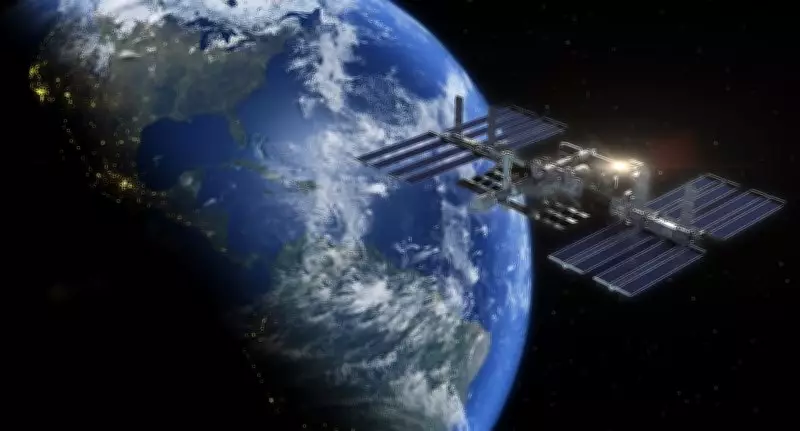
The expansion comes as the ISS, a joint project involving NASA, Roscosmos, ESA, JAXA, and CSA, is scheduled to be decommissioned around 2030. NASA has been transitioning to commercial space stations and lunar exploration under the Artemis program. China, which is not a partner in the ISS due to U.S. restrictions, has been developing its own independent space capabilities. The expanded Tiangong could become the only functioning space station in low Earth orbit after the ISS is retired, potentially opening doors for international collaboration.
Scientific and Commercial Potential
China has invited international partners to participate in experiments aboard Tiangong, and the expanded station will offer more opportunities for research in microgravity, biology, materials science, and astronomy. Commercial applications, such as space manufacturing and tourism, are also being explored. The expansion is expected to boost China's space industry and inspire a new generation of scientists and engineers.
Challenges and Criticisms
Despite the ambitious plans, China's space program faces challenges, including technical complexities, budget constraints, and concerns over space debris. Critics also point to the lack of transparency in China's space activities and the potential for militarization. Nonetheless, the expansion of Tiangong represents a significant step forward for China's space ambitions and a shift in the global space landscape.
As the ISS era winds down, China's space station expansion underscores the growing competition and cooperation in space exploration. With the new modules, Tiangong will be able to support a permanent crew of six astronauts, conducting experiments that could benefit humanity and pave the way for future deep-space missions.