

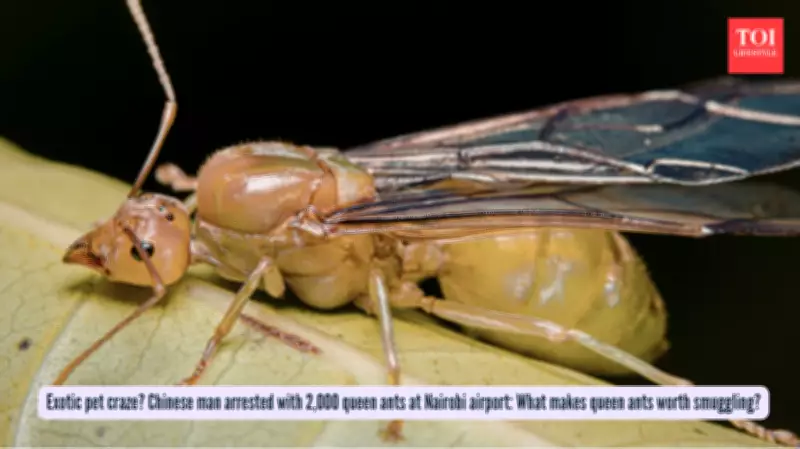
Chinese National Arrested in Major Ant Smuggling Operation at Nairobi Airport
In a startling case that exposes the dark underbelly of the exotic pet trade, a Chinese man was apprehended at Jomo Kenyatta International Airport (JKIA) in Nairobi while attempting to smuggle over 2,000 live queen garden ants out of Kenya. The suspect, identified as Zhang Kequ, was intercepted by Kenya Wildlife Service (KWS) officers who discovered the protected insects cleverly concealed within his personal luggage.
Elaborate Concealment Methods Revealed in Court
According to court documents presented by prosecutor Allen Mulama at Milimani Court, authorities found 1,948 garden ants meticulously packed in specialized test tubes within Zhang's luggage. In a further attempt to evade detection, an additional 300 live ants were discovered hidden inside three rolls of tissue paper. These ants, regulated under international biodiversity agreements like CITES (Convention on International Trade in Endangered Species), represent some of the most sought-after commodities in the growing exotic pet markets across Europe and Asia.
The Lucrative World of Ant Trafficking
Investigators believe Zhang leads a sophisticated trafficking ring that was previously busted last year, though he managed to escape using a fake passport at that time. This latest arrest underscores the persistent nature of this illegal trade, which capitalizes on the fascination some people have with ant colonies. "These insects build very interesting colonies," explains Edith Kabesiime, Wildlife Campaign Manager at World Animal Protection, in an interview with TRT Afrika. "Some people find that process very fascinating, exciting and entertaining. They derive joy from watching these complex social structures develop."

Ecological Importance of Harvester Ants
The smuggled garden ants, particularly harvester ants, play crucial roles in maintaining healthy ecosystems. Experts emphasize that these insects:
- Spread seeds across landscapes
- Aerate soil through their extensive digging activities
- Significantly boost plant growth and biodiversity
"If we were to lose all the harvester ants and termites, the savannah would collapse," warns Martins from the Turkana Basin Institute, highlighting the catastrophic consequences of removing these keystone species from their natural habitats. Queen ants are especially vital since they serve as the reproductive foundation for entire colonies, meaning their trafficking threatens complete ecosystem structures.
Kenya's Crackdown on Insect Poaching
This arrest represents part of Kenya's broader effort to combat wildlife trafficking beyond traditional targets like elephants and rhinos. In May 2025, a landmark case resulted in four smugglers - including two Belgians, a Vietnamese national, and a Kenyan - receiving one-year jail sentences or $7,700 fines for attempting to export thousands of ants. The Belgian defendants claimed ignorance of wildlife laws, describing their activities as merely a hobby.
KWS senior officer Duncan Juma told BBC that more arrests are imminent as investigations expand to ant-harvesting hotspots beyond Nairobi. The court has authorized forensic examinations of Zhang's electronic devices and approved five days of detention for further interrogation. This strategic shift from focusing solely on large game to addressing smaller but equally destructive threats reflects Kenya's comprehensive approach to biodiversity protection.
The Global Exotic Pet Trade Phenomenon
The demand for exotic ants stems from a growing international fascination with formicariums - specialized clear tanks that allow enthusiasts to observe ant colonies' intricate social dynamics. While ant-keeping might seem like a harmless hobby, the removal of queen ants from wild populations disrupts delicate food chains, compromises soil health, and threatens the very ecosystems that sustain broader biodiversity. Kenya maintains that the ecological value of these insects in their natural habitats far outweighs their appeal as novelty pets, setting the stage for continued enforcement actions against this emerging form of wildlife crime.

