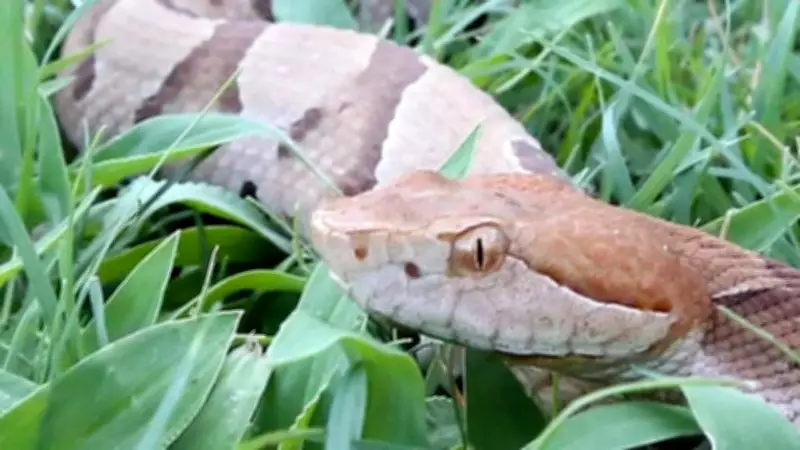
As temperatures rise across the southeastern United States, wildlife experts say copperhead snakes are becoming more active across Georgia’s forests, backyards, and suburban edges. Known for their striking camouflage and occasional encounters with humans, copperheads are among the most frequently encountered venomous snakes in the region. While bites are rarely life-threatening, their appearance often causes confusion with harmless species, making identification an important seasonal concern for residents, hikers, and gardeners.
Why Do We See More Copperheads Now
With summer heat setting in, copperhead snakes begin to move more frequently in search of food and cooler shelter. Wildlife specialists note that warmer temperatures increase snake activity, which in turn raises the chances of human encounters. Research tracking emergency cases in the southeastern U.S. suggests venomous snake bites tend to rise as temperatures climb. Copperheads, in particular, adapt well to suburban environments, making them more visible during late spring and summer months.
Where Copperheads Are Commonly Found
Copperheads are widely distributed across the eastern United States and are especially common in Georgia and surrounding states. According to wildlife data, they thrive in wooded areas, rocky terrain, forest edges, and even suburban neighborhoods where leaf litter and debris provide cover. They are often found near logs, gardens, and outdoor storage areas. Their ability to survive in both natural and human-altered environments makes them one of the most encountered venomous snakes in the region.

How to Identify a Copperhead
As per a source from the National Centre for Biotechnology Information (NCBI), one of the key challenges during copperhead season is distinguishing them from harmless snakes. Copperheads typically have a light brown or tan body with distinctive dark, hourglass-shaped bands running across their backs. Their heads are copper-colored, giving the species its name. They also have a triangular head shape and vertical pupils, traits common in pit vipers. Experts warn that their coloration blends extremely well with dry leaves, making them difficult to spot even at close range.
Why Misidentification Is Common
Wildlife officials say many snake sightings reported as copperheads turn out to be non-venomous species. This confusion often happens because several harmless snakes share similar brown or patterned bodies. The copperhead’s camouflage is so effective that even trained observers can overlook them in natural environments. Experts emphasize that fear-driven assumptions often lead to unnecessary harm to harmless wildlife, which plays an important role in controlling pests like rodents and insects.
Behavior and Risk Level Explained
Despite their reputation, copperheads are not aggressive toward humans. Studies show that most bites occur when a snake is accidentally stepped on or touched. When threatened, copperheads typically remain still or attempt to escape rather than attack. Wildlife research also notes that they may deliver “dry bites,” meaning no venom is injected in some defensive strikes. While medical attention is always necessary after any bite, fatalities from copperheads are extremely rare.
What Makes Them Medically Significant
A study from the University of Georgia (UGA) notes that copperheads belong to the pit viper family, equipped with heat-sensing organs that help them detect warm-blooded prey. Their venom is designed primarily to immobilize small animals like rodents and frogs. In humans, bites usually cause immediate pain, swelling, and bruising around the affected area. However, clinical studies show that most cases are treatable with standard medical care, and severe complications are uncommon when treatment is prompt.

Staying Safe During Snake Season
Experts recommend simple precautions to reduce the risk of encounters. Wearing closed shoes outdoors, avoiding tall grass, and carefully checking areas like wood piles or garden edges can help prevent accidental contact. If a snake is spotted, wildlife officials strongly advise leaving it alone and maintaining distance. Copperheads play a valuable ecological role by controlling rodent populations, and most will move away if not disturbed. Awareness and caution remain the most effective tools for safe coexistence during peak snake season.