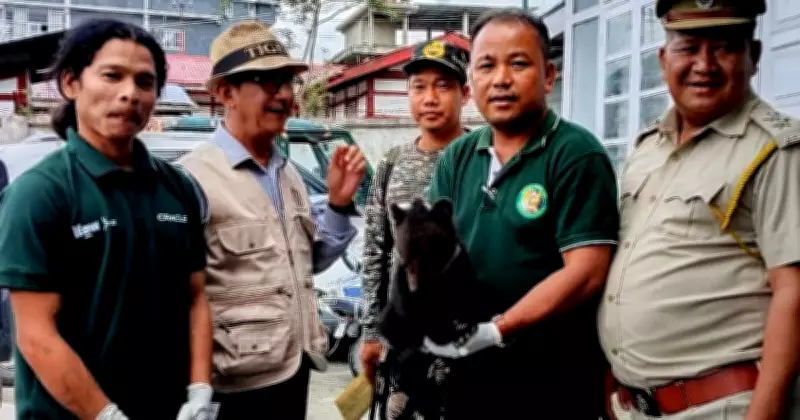
A chance doom scroll and a 200-kilometer drive gave an abandoned Asiatic black bear cub a second chance at life in Arunachal Pradesh. The cub, found alone on a farm in Kamle district about a month ago, was being kept by a local man before wildlife authorities intervened.
Discovery and Rescue Operation
The bear cub was discovered by a farmer on his property in Kamle district, approximately 200 km from the state capital Itanagar. The farmer, who found the cub alone and seemingly abandoned, brought it home and kept it in his possession for about a month. The rescue operation was initiated after a wildlife enthusiast spotted a social media post about the cub during a doom scroll session and alerted the authorities.
Upon receiving the tip, a team from the Wildlife Trust of India (WTI) and the Arunachal Pradesh Forest Department coordinated a rescue mission. The team drove 200 km to the farmer's location, where they assessed the cub's health and condition. The cub, estimated to be around two to three months old, appeared malnourished but otherwise uninjured.

Rehabilitation and Future Plans
The Asiatic black bear cub was transported to the WTI's rescue and rehabilitation center in Itanagar, where it is receiving veterinary care and a specialized diet. According to Dr. Sunil Kumar, a veterinarian with WTI, the cub is responding well to treatment and is expected to make a full recovery. "The cub was dehydrated and underweight, but with proper nutrition and care, it should regain its strength within a few weeks," he said.
The WTI plans to release the cub back into the wild once it is deemed fit. However, the exact location for release will be determined after assessing suitable habitats in the region. "We aim to release the cub in a protected area where it can thrive without human interference," added Dr. Kumar.
Legal and Awareness Aspects
Keeping a wild animal in captivity is illegal under the Wildlife Protection Act, 1972. The farmer was educated about the legal implications and the importance of reporting such findings to the forest department. The WTI and forest department are using this incident to raise awareness among local communities about the proper protocol for encountering wildlife.
The rescue highlights the role of social media in wildlife conservation. A simple online post led to a coordinated effort that saved the cub's life. "This rescue shows how vigilance and timely action can make a difference," said a WTI spokesperson.
The bear cub is now under 24-hour observation and is expected to be released within three to six months, depending on its recovery progress.