

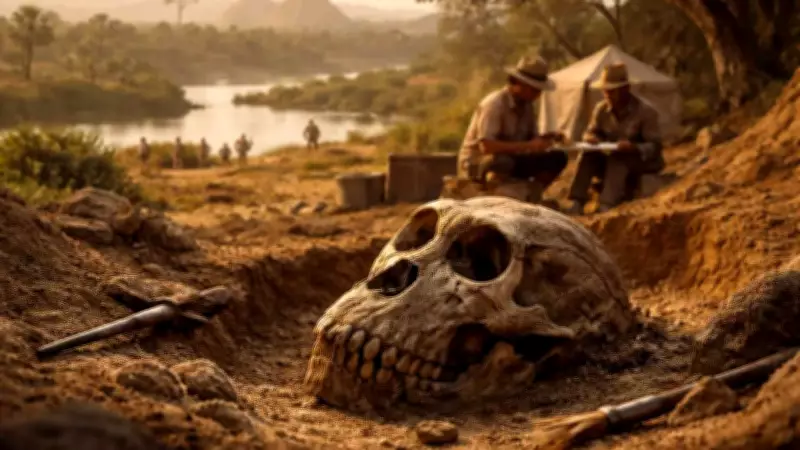
Egyptian Fossil Discovery Challenges East Africa's Status as Sole Human Birthplace
For decades, the scientific consensus has pointed to East Africa as the most probable birthplace of humanity, with extensive fossil discoveries in regions like Ethiopia and Kenya supporting this theory. However, a remarkable new find from a previously understudied area of Egypt is now casting significant doubt on this long-standing narrative, suggesting that our earliest ancestors may have evolved across a much wider geographic territory than previously imagined.
Groundbreaking Discovery in Egypt's Less Explored Regions
The recent fossil discovery comes from an area in Egypt that has not been extensively researched, making its significance even more profound. What makes this find particularly important is both its considerable age and its distinct characteristics, which establish a clear connection with primate species that are believed to be directly associated with human evolutionary history.
According to the pivotal study titled "An Early Miocene ape from the biogeographic crossroads of African and Eurasian Hominoidea," published in the prestigious journal Science, this fossil provides compelling evidence that early ape evolution was not confined exclusively to East Africa. Instead, it suggests that crucial evolutionary events may have also occurred in regions like Egypt, potentially rewriting our understanding of humanity's early history.

Why Scientists May Have Been Looking in the Wrong Place
For years, the majority of paleontological research has been concentrated in East African regions where abundant fossils have been uncovered, naturally leading to the assumption that human evolution was primarily localized to these areas. This new Egyptian discovery fundamentally challenges that perspective, revealing that focusing solely on these traditional research hotspots may have caused scientists to overlook other critically important regions.
The fossil's characteristics indicate that North Africa, particularly Egypt, may have played a far more significant role in human evolutionary processes than previously acknowledged. This realization is prompting researchers to reconsider established theories and expand their investigative horizons beyond conventional boundaries.
What the Egyptian Fossil Reveals About Early Human Ancestors
The Egyptian fossil exhibits specific morphological traits that suggest a direct relationship with early primates from which humans eventually descended. This discovery is invaluable as it provides researchers with crucial insights into evolutionary patterns and adaptation mechanisms across different species during critical developmental periods.
Furthermore, the fossil serves as an important indicator of early primate movement and migration patterns, demonstrating that these ancestral species possessed the capability to traverse significant distances between regions. This mobility suggests that evolutionary developments were not isolated to single locations but rather occurred across interconnected geographic landscapes.
Previously Overlooked Regions Emerge as Key Research Areas
This groundbreaking finding underscores the vital importance of investigating less familiar and previously neglected geographic areas in human origins research. Regions that have received minimal scientific attention may be concealing crucial information about mankind's earliest beginnings, potentially holding answers to questions that have eluded researchers for generations.
As a direct result of this discovery, scientists are increasingly venturing into new territories for their investigations, recognizing that a more comprehensive understanding of human evolution requires exploring beyond traditional research boundaries.
Why This Egyptian Discovery Matters for Understanding Human Evolution
Beyond simply expanding the existing fossil record, this Egyptian discovery fundamentally alters how we conceptualize human evolutionary processes. It demonstrates that evolution was not constrained to a single geographic area but rather represents a complex, multifaceted phenomenon influenced by diverse environmental factors across different regions.

This revelation has the potential to redirect the course of future scientific studies, encouraging researchers to investigate other understudied areas that may hold additional clues about humanity's origins. The discovery emphasizes that evolutionary history is far more intricate and geographically dispersed than previously assumed.
Final Insights on Human Origins and the Egyptian Fossil Discovery
This remarkable find from Egypt serves as a powerful reminder that scientific knowledge is continually evolving and subject to revision as new evidence emerges. What was once considered established truth can be fundamentally challenged when additional information comes to light, demonstrating the dynamic nature of scientific inquiry.
By looking beyond conventional locations traditionally associated with human origins, science is gradually providing us with a more comprehensive and nuanced understanding of our beginnings. This Egyptian fossil discovery represents not just a single finding but a paradigm shift in how we approach the fundamental question of where we come from as a species.
