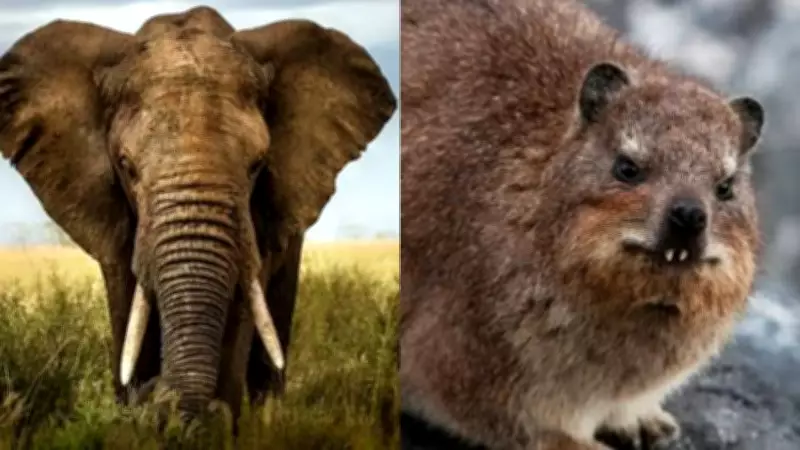
At first glance, elephants and hyraxes seem to have absolutely nothing in common. One is the largest land animal on Earth, capable of weighing several tons, while the other is a small, rabbit-like mammal that quietly lives among rocky cliffs in Africa and the Middle East. For decades, naturalists unsuccessfully tried to establish a taxonomic position for hyraxes. It was believed that these animals belonged to the rodent family due to their appearance. Modern research has revealed one of the most intriguing discoveries made by evolutionary science: elephants are genetically connected to hyraxes.
The Connection to Elephants
The mystery surrounding hyraxes was partially revealed after a more detailed analysis of anatomical and genetic information. Despite their significant dissimilarity in size, elephants and hyraxes share many unusual biological similarities. They have very similar toenails and cushion-like feet, and hyrax tooth formation is similar to the development of elephant tusks. The biggest discovery was made via genetic analysis: the hyrax is more genetically similar to elephants than it is to rodents. Moreover, both species are considered Afrotherians — representatives of mammals that appeared in Africa millions of years ago. This same group of mammals includes marine mammals like sea cows.
Millions of Years of Evolution
It is thought that the common ancestor of these species existed around 60 million years ago and looked quite different from both animals. However, over millions of years, evolution forced these creatures to develop in unique ways. The elephant acquired immense body weight, a trunk for grasping, and long, hard tusks for protection against enemies and harsh environmental conditions. Hyraxes, in turn, were forced to become smaller and more agile due to their rocky habitat. This divergence highlights the remarkable adaptability of life on Earth.