

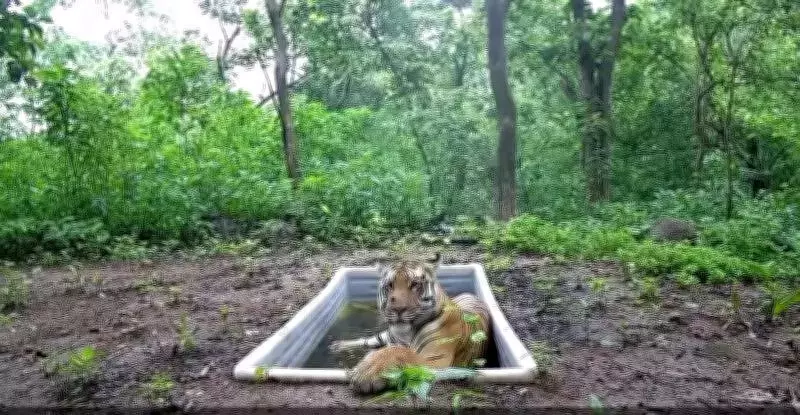
Gujarat's Lone Tiger to Receive Air-Lifted Female Companion in Unprecedented Conservation Move
In a conservation effort reminiscent of literary matchmaking, Gujarat's solitary male tiger roaming the Ratanmahal landscape is set to receive a carefully selected female companion, transported via airlift in what officials describe as a historic translocation initiative. The plan, currently under active discussion between the Gujarat Forest Department and the National Tiger Conservation Authority (NTCA), aims to address the tiger's solitary status through strategic wildlife management.
Timeline and Preparations for the Translocation
Forest officials have identified May and June as the optimal months for the translocation operation, following crucial developments in Delhi where Gujarat Principal Chief Conservator of Forests Jaipal Sinh met with NTCA representatives. The meeting yielded significant progress, with Gujarat securing inclusion in the ongoing national tiger census—a mandatory prerequisite before any translocation can proceed.
The census completion will provide essential population data that will inform the selection process and ensure ecological compatibility between the translocated animals and their new environment.

Sourcing and Selection Criteria for the Female Tiger
Officials have outlined a clear hierarchy of preferences for sourcing the female tiger. The primary option involves identifying a wild tigress that meets specific criteria: an animal that is naturally isolated, has dispersed from its original territory, or is actively seeking a mating partner. This approach prioritizes animals that would benefit from relocation while minimizing disruption to established populations.
Should such a candidate prove unavailable, authorities have prepared an alternative strategy involving a female tiger captured from the wild. Any captured animal would undergo rigorous screening processes, including behavioral assessments and health evaluations. Forest department officials emphasized that any selected tiger must have no history of human or livestock attacks, ensuring community safety remains paramount.
Monitoring and Safety Protocols
Once selected, the female tiger will be fitted with a radio collar to enable continuous tracking of her movements. This monitoring system serves dual purposes:
- Allowing conservation teams to study adaptation patterns and territorial establishment
- Providing early warning if the animal approaches human settlements or conflict-prone areas
The radio collar technology will facilitate rapid response from field teams, enhancing both animal welfare and community protection measures.
Background and Conservation Context
The male tiger's presence in Gujarat has been under scientific observation since late October 2025, when state forest authorities formally notified the NTCA about the animal's successful adaptation to the Gujarat landscape. Officials have documented at least two confirmed kills by the tiger, indicating successful hunting behavior and ecological integration.
Conservation measures already implemented focus on supporting the tiger's long-term survival, with the proposed translocation representing the next phase in creating a sustainable population. The Ratanmahal landscape, where the tiger currently ranges, offers suitable habitat that officials believe can support a breeding pair and potentially establish a new tiger population in the region.
This ambitious project represents a significant step in India's tiger conservation efforts, combining scientific methodology with innovative logistics to address the challenges of isolated wildlife populations. The airlift component, while logistically complex, offers the advantage of minimizing transport stress and reducing ground-based risks during the translocation process.

