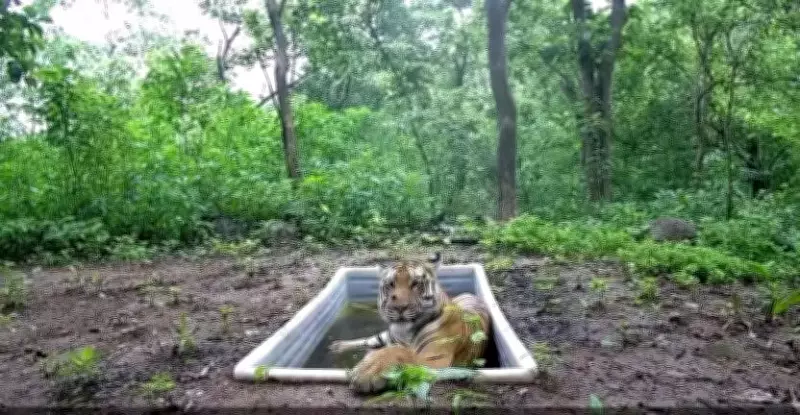
Ahmedabad: Gujarat's lone male tiger is likely to receive a female companion after the monsoon season. The National Tiger Conservation Authority (NTCA) has requested the state government to submit a detailed habitat assessment report, which is the final major hurdle before a tigress can be translocated to the Ratanmahal landscape. The male tiger has been roaming in this area since February of last year. This initiative is part of the state's broader efforts to establish a viable tiger population in the region.
Preparations Underway for Habitat Assessment
Senior forest department officials have confirmed that preparations for the assessment are already in progress and will be completed once the monsoon ends. "The NTCA has made it clear that the tigress will be moved only after the report, which must include prey-base density estimates, is submitted and approved," a senior forest official stated.
The male tiger has established a territory of approximately 120 square kilometers, covering areas such as Devgadh Baria, Chhota Udepur, Dolariya, Sagtala, and the Sukhi Dam region, all within about 25 kilometers of the Ratanmahal landscape. Over the past year, officials tracking the animal have documented successful hunts and other signs indicating that it has adapted well to its new environment.

Assessment Criteria and Next Steps
The habitat assessment will examine several factors, including prey availability, habitat suitability, water resources, existing protection measures, and the risk of human-wildlife conflict at the proposed release site. Based on this report, the NTCA will make its final decision. During a meeting in February, the authority had agreed in principle to send a female tiger after the completion of the national tiger census, which has also been cleared for Gujarat. The habitat assessment request is typically the last requirement before any wild animal is translocated to a new landscape.
Tigers in India breed between November and April, and the goal is to have the tigress released and well-settled before the next mating season. The plan involves airlifting the female tiger and releasing her close to the male's existing range. "The preferred candidate would be a tigress that has dispersed from her original territory or is moving in search of a mate. If no such animal is available, one captured from the wild may be considered after detailed screening. The chosen tigress will undergo health checks and behavioral assessments," a source explained.
Officials also want to ensure that the selected animal has no history of attacks on humans or livestock. The tigress will be fitted with a radio collar for continuous monitoring after her release. For Gujarat, this translocation would mark the first step toward establishing a self-sustaining tiger population in the state.