

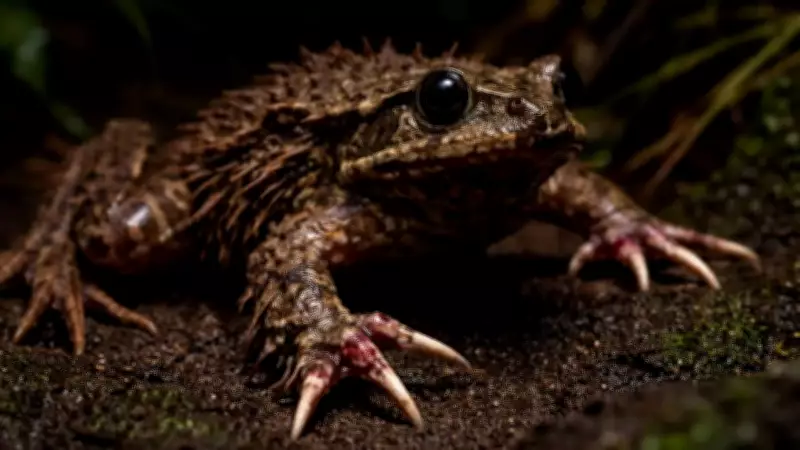
The Hairy Frog: Nature's Most Radical Defender
In the natural world, survival often hinges on traits like speed, camouflage, or poison. However, one amphibian species takes a more extreme approach, employing a truly unique and shocking strategy to protect itself. Known as the hairy frog or wolverine frog, this creature from Central Africa has evolved an extraordinary defensive system that involves breaking its own bones to form claws.
How the Hairy Frog Breaks Bones to Form Claws
The hairy frog, scientifically named Trichobatrachus robustus, possesses an unconventional method of self-defense. When it senses danger, this frog can actually fracture its toe bones and push them through the skin, creating sharp, claw-like structures. According to a study titled "Concealed weapons: erectile claws in African frogs," published by The Royal Society, these claws are formed from actual bone that pierces the skin as a defense mechanism.
Unlike the claws of mammals such as cats and dogs, which are made of keratin, the hairy frog's claws are entirely composed of bone. This bone emerges through the skin, serving as a tool to ward off potential threats. The process is a highly exaggerated response, primarily used for self-defense when escaping is impossible.

Why This Frog Resorts to Self-Harm for Survival
While most frog species rely on jumping away from threats, the hairy frog fights back in dire situations. It extends its bone claws to scratch or wound predators, showcasing a rare aggressive tactic in the amphibian world. This behavior highlights an unusual evolutionary development, where self-harm becomes a method of self-preservation.
One of the most fascinating aspects of this defense is the frog's ability to regenerate after using its claws. It is believed that once the threat subsides, the bone retreats back into the toe, and the injured tissue gradually heals. Although the exact process is not fully understood, this capability allows the frog to repeat the defensive act multiple times throughout its lifetime.
Habitat and Lifestyle of the Hairy Frog
The hairy frog is native to Central Africa, inhabiting countries such as Cameroon, Nigeria, and the Democratic Republic of Congo. These frogs typically reside near flowing rivers in wooded regions, where they thrive in moist environments.
During the mating season, male hairy frogs develop hair-like features on their bodies. Contrary to their appearance, these are not actual hairs but skin filaments that aid in oxygen intake and help protect eggs underwater. This adaptation further underscores the species' unique evolutionary traits.
The Hairy Frog as a Symbol of Nature's Unpredictability
The ability to fracture one's own bones and use them as offensive weapons is exceptionally rare in the animal kingdom. While most animals evolve methods to avoid injury, the hairy frog embraces self-harm as a survival strategy. This bizarre adaptation serves as a powerful reminder that nature is not always predictable, and evolution can produce extraordinary solutions for survival.
Amid a world filled with strange creatures, the hairy frog stands out as a shocking example of the relentless struggle for existence. Its radical defense mechanism not only ensures its survival but also challenges our understanding of evolutionary possibilities.

