

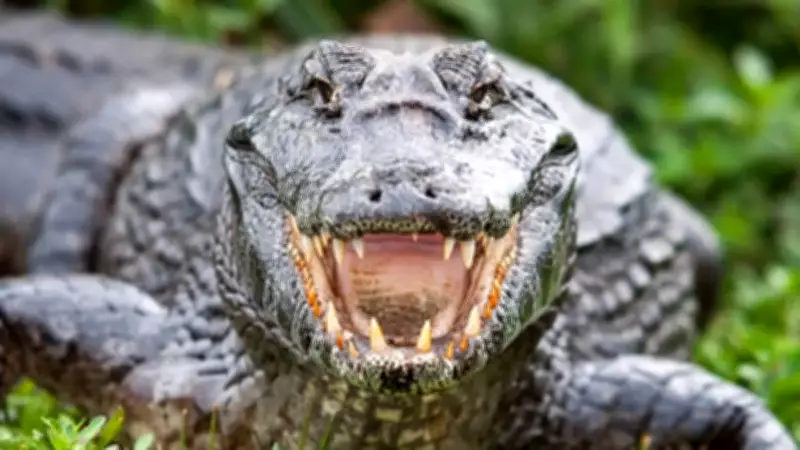
Crocodiles and alligators share a striking similarity in physical appearance. Slow-moving swamps, coastal marshes, and other areas are common grounds where these two apex predators may be encountered. Despite similarities, experts point out that distinguishing between a crocodile and an alligator is relatively simple when one knows exactly what to look for. Several factors are used by wildlife specialists to differentiate between these reptiles.
Snout Shape – A Defining Difference
The shape of the snout is one of the best ways to draw a sharp line between an alligator and a crocodile. Crocodiles usually have a long, V-shaped snout that appears sharp and elongated, facilitating the gripping of various prey animals. Alligators, in contrast, feature shorter, U-shaped snouts that are powerful and suited to their feeding behaviour. Experts say this distinction is linked to the adaptation of both species to distinct feeding and living habits.
Teeth Visibility – A Simple Test
Another simple way to distinguish these reptiles is to observe the visibility of their teeth. Crocodiles usually leave some lower teeth exposed even after closing their jaws, creating a "toothy grin" because their jaws cannot overlap properly. For alligators, the upper jaw overlaps perfectly with the lower one, so only upper teeth are visible.

Colour and Skin Tone Differences
Coloration also helps wildlife specialists identify these animals correctly. Typically, crocodiles are paler, varying from olive green to grey depending on species, helping them blend into brackish and saltwater environments. Alligators are much darker, often blackish or greyish, which aids camouflage in freshwater environments.
Habitat – A Great Distinction Criterion
Crocodiles are highly adaptive, thriving in both saltwater and freshwater environments such as estuaries, rivers, and marshes. Alligators are mainly confined to freshwater ecosystems like swamps, marshes, and low-flowing rivers. They are common in North America, especially the southeastern US, and in parts of China.
Behavioural Differences in the Wild
Behaviour also helps differentiate these reptiles. Crocodiles are known to be more aggressive and territorial, becoming defensive when approached. Alligators are more reserved and rarely react aggressively even when provoked, though they are equally strong physically.
Feeding Patterns and Bite Pressure
Attack and kill techniques differ as well. Crocodiles rely heavily on gripping power to hunt fish and birds. Alligators have a stronger crushing bite relative to body weight, targeting turtles, fish, and small mammals in freshwater habitats.
Evolutionary Differences and Survival Strategies
Despite morphological and ecological similarities, crocodiles and alligators have taken separate evolutionary paths. Crocodiles developed broad ecological adaptability, thriving in multiple habitats. Alligators adapted to stable freshwater ecosystems, evolving strong bite power and darker coloration for camouflage.






