

India's Cheetah Reintroduction Program Expands with Eight New Arrivals from Botswana
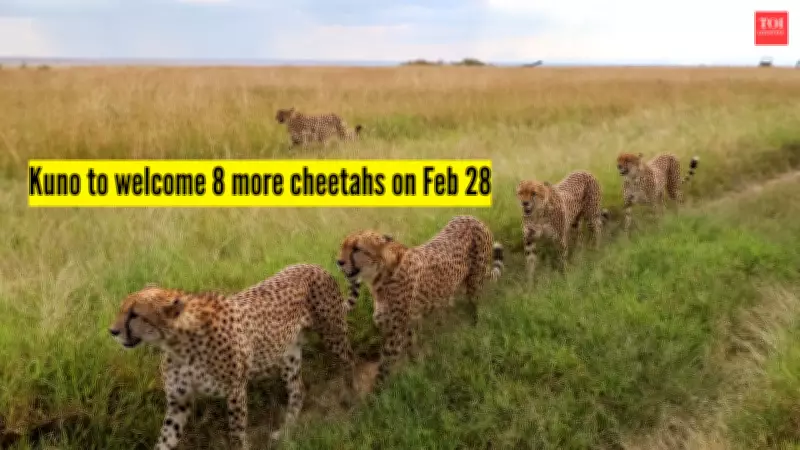
India's ambitious cheetah reintroduction initiative is poised to enter a significant new phase, with eight additional African cheetahs scheduled to arrive at Kuno National Park in Madhya Pradesh on February 28, according to official reports. This third international translocation will elevate the total cheetah population in India to 46 animals, marking a substantial milestone for conservation efforts.
Details of the Upcoming Translocation
The incoming batch from Botswana comprises six females and two males, carefully selected to enhance genetic diversity and breeding potential. Madhya Pradesh Principal Chief Conservator of Forest (Wildlife) Subharanjan Sen confirmed that the cheetahs will be transported via an Indian Air Force aircraft to Gwalior, followed by a helicopter transfer to Kuno National Park, with arrival anticipated around 9:30 AM on February 28.
This operation represents the third international transfer under Project Cheetah, India's pioneering intercontinental translocation of a large carnivore species. The program was inaugurated on September 17, 2022, when Prime Minister Narendra Modi released eight cheetahs from Namibia into Kuno to commemorate India's 75th Independence anniversary. A subsequent group of 12 cheetahs arrived from South Africa in February 2023 to bolster the initial population.

Progress and Population Growth
Beyond adaptation to Indian conditions, the cheetahs have demonstrated remarkable reproductive success since their introduction. The first cheetah births on Indian soil in over seven decades have been documented at Kuno, with multiple litters born in recent years. Notably, on February 7, 2026, Aasha, a Namibian cheetah and now a second-time mother, gave birth to five healthy cubs.
Further expanding the population, Madhya Pradesh Chief Minister Mohan Yadav announced on February 18, 2026, that a South African cheetah named Gamini delivered three cubs at Kuno National Park. This litter increased India's overall cheetah count to 38, showcasing the program's growing viability. The Asiatic cheetah was declared extinct in India in 1952, primarily due to excessive hunting and severe habitat degradation.
Challenges and Conservation Strategies
The reintroduction effort aims to restore the species to appropriate grassland ecosystems while enhancing biodiversity management in central India's forest landscapes. However, the journey has not been without difficulties. Several adult cheetahs have perished since the project's inception, attributed to various factors including diseases, infections, and territorial conflicts.
Wildlife authorities emphasize that such mortality is not uncommon in reintroduction programs and have implemented adaptive management strategies to address emerging concerns. These measures include revised monitoring protocols and improved enclosure management to better safeguard the animals.
Quarantine and Monitoring Procedures
Cheetah Project Field Director Uttam Sharma revealed that special enclosures have been prepared at Kuno to accommodate the Botswana cohort. Upon arrival, the animals will undergo a quarantine period of approximately one month. During this time, veterinary teams will meticulously monitor their health, dietary habits, and adaptation progress before gradually transitioning them to larger acclimatization enclosures and eventually into the wild.
This quarantine process is a standard component of international wildlife translocations, designed to ensure comprehensive disease screening, effective stress management, and behavioral adjustment to the new habitat.
Expanding Habitat and Future Prospects
Kuno National Park, located in Madhya Pradesh's Sheopur district, was selected as the primary reintroduction site due to its abundant prey species, suitable grassland habitat, and minimal human pressure in core areas. The park has undergone extensive habitat restoration over the years to create an optimal environment for the big cats.
Additionally, the Gandhi Sagar Wildlife Sanctuary has emerged as a secondary landscape for cheetah expansion. Currently housing a South African male coalition and a female, this development underscores the project's long-term objective of establishing multiple viable populations across India.

With the arrival of the Botswana batch, conservationists are optimistic that increased genetic diversity and a higher proportion of females will significantly enhance breeding success and population establishment. As India's cheetah count rises to 46, Project Cheetah continues to capture global attention as one of the world's most closely monitored conservation experiments, symbolizing a renewed commitment to wildlife preservation and ecological balance.
