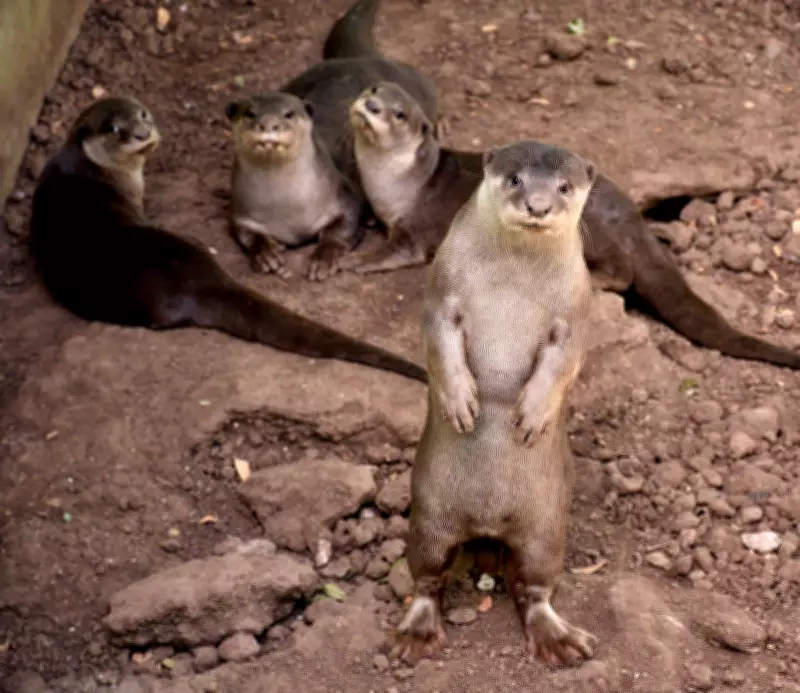
At least 10 zoos across India house smooth-coated otters, with almost all tracing their lineage back to a single male otter named Lalu from Surat's Sarthana Nature Park. This unique family tree gives the Surat facility a special reason to celebrate Father's Day.
Origin Story: From Rescue to Breeding Success
Lalu was brought to the zoo after being rescued during the devastating floods of 2006. He was later paired with two females, Bhuri and Kali, who were also rescued during the same floods. The trio bred successfully, producing pups and kickstarting what became India's first successful captive breeding programme for smooth-coated otters.
"Their mating started almost after a year of arrival once they became comfortable. Two pups were born in 2008 and later mating with another female was planned," said Dr Rajesh Patel, zoo superintendent.

Remarkable Offspring Numbers
To date, 63 pups have been born at Sarthana zoo through the offspring of the three original otters. This success stands in stark contrast to other zoos, where breeding attempts repeatedly failed. The achievement placed the city zoo in a special category, enabling it to receive tigers and other rare species in exchange for otters.
"Otters are found in rivers of south Gujarat and it is a safe habitat for them. They can be seen in Tapi river around the zoo as well," said Puneet Nayyar, conservator of forests.
Exchange Programme and Distribution
Twenty-six otters have been exchanged with different zoos across India, bringing in 104 birds and animals in return. In August 2025, a pair of otters was sent to Delhi zoo in exchange for Sangai deer. The capital city received a pair of otters after two decades. Similarly, otters born in Surat now reside in zoos in Ahmedabad, Hyderabad, Chandigarh, Mysuru, Raipur, Jamnagar, Rajkot, Jaipur and Bhubaneshwar.
Future Plans: Reintroduction into the Wild
As the otter population continues to grow, zoo authorities are considering reintroduction into the wild. "As the population of otters keeps growing, we will plan reintroduction in the wild. It requires detailed study to understand the natural habitat and conditions before reintroduction," said Dr Patel.