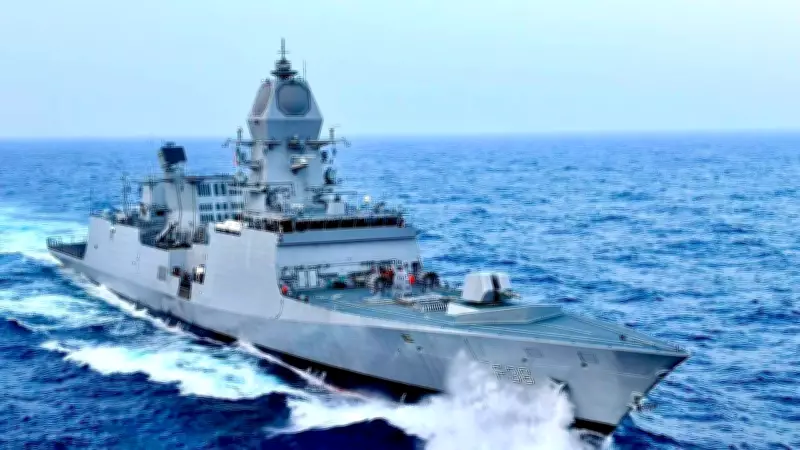
INS Dunagiri, the fifth warship of the Indian Navy's Project 17A programme, was commissioned on June 21, 2026, in Kolkata alongside INS Sanshodhak and INS Agray. This Nilgiri-class stealth guided-missile frigate is designed by the Indian Navy's Warship Design Bureau and built by Garden Reach Shipbuilders & Engineers (GRSE).
Project 17A: A Leap in Naval Technology
Project 17A is India's follow-on programme to the Shivalik-class frigates. While the Shivaliks introduced stealth features, the newer frigates incorporate improved stealth shaping, advanced sensors, greater automation, and more powerful weapons. The project is central to the Navy's efforts to replace ageing warships with modern multi-role combatants capable of operating across the Indian Ocean and beyond.
The class is designed to perform air-defence, anti-surface, anti-submarine, and long-range strike missions simultaneously, making it one of the Navy's most versatile platforms.

Specifications and Capabilities
At nearly 149 metres in length and displacing around 6,600 tonnes, INS Dunagiri is a substantial combat platform. The warship combines stealth features with a sophisticated combat management system, allowing it to detect, track, and engage threats across multiple domains.
The frigate is equipped with advanced radars, electronic warfare systems, and anti-submarine sensors. Its weapon package includes BrahMos supersonic cruise missiles, surface-to-air missiles, torpedoes, and naval guns, enabling it to engage enemy ships, submarines, and aircraft.
Advanced Automation and Propulsion
One of the major upgrades over previous frigates is its high degree of automation. The ship uses an Integrated Platform Management System that allows crew members to monitor and control critical onboard functions from centralised stations. It is also powered by a Combined Diesel or Gas propulsion arrangement, giving commanders flexibility between fuel-efficient cruising and high-speed operations.
The vessel can also operate helicopters for anti-submarine warfare, maritime surveillance, and search-and-rescue missions, extending its reach far beyond the horizon.
Strategic Importance
The induction of INS Dunagiri strengthens India's ability to monitor and secure critical sea lanes stretching from the Arabian Sea to the western Pacific. It arrives at a time when the Indian Ocean is witnessing increased naval activity by multiple powers, particularly China.
Together with sister ships of the Project 17A class, INS Dunagiri will form the backbone of India's future blue-water fleet, providing the Navy with a powerful platform capable of deterrence, power projection, and maritime security operations.
Complementary Role of INS Agray
While INS Dunagiri is designed as a multi-role stealth frigate, INS Agray, commissioned alongside it, has a more specialised role. Agray is an anti-submarine warfare shallow-water craft focused on hunting enemy submarines in coastal waters, complementing the broader combat capabilities of frigates such as Dunagiri.
Named after the Himalayan peak Dunagiri in Uttarakhand, the warship is also a spiritual successor to the earlier INS Dunagiri, a Leander-class frigate that served the Navy for more than three decades.