

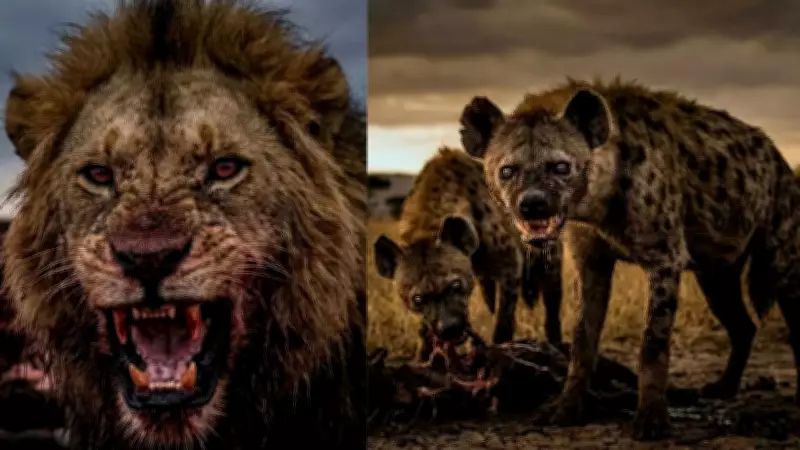
Lions vs Hyenas: The Ultimate Savanna Showdown of Strength vs Strategy
In the vast, sun-drenched savannas of sub-Saharan Africa, two iconic predators share the landscape in a complex dance of competition and coexistence. Lions and hyenas inhabit overlapping territories, pursue similar prey species, and maintain a constant state of wary observation toward one another. While popular culture often portrays them as bitter enemies locked in perpetual conflict, the reality reveals a more nuanced ecological relationship shaped by fascinating biological differences.
The Rivalry Beyond Simple Animosity
People frequently imagine lions and hyenas as mortal adversaries, and there is certainly evidence supporting this perception. Lions have been documented stealing freshly made kills from hyena clans, while hyenas will aggressively mob lions when they possess numerical superiority. However, reducing their interaction to mere hostility overlooks the intricate ecological dynamics at play. These two species exhibit remarkably different approaches to survival, from their hunting methodologies to their social organization. Some similarities create friction between them, but their distinct adaptations frequently determine which predator gains advantage in specific situations.
This represents a classic confrontation between raw power and tactical intelligence, between imposing size and remarkable endurance, between instinctual behavior and calculated cunning. Understanding their differences provides insight into how Africa's most famous predators have evolved to thrive in challenging environments.

Comprehensive Comparison: Lions Versus Hyenas
Physical Characteristics and Appearance
Lions are undeniably the larger and more visually imposing animals. Male lions can reach weights exceeding 550 pounds with body lengths approaching ten feet from nose to tail tip. Their majestic presence commands attention across the grasslands, with males sporting distinctive manes that serve as both protection and display. Female lions, while smaller than their male counterparts, remain powerful and efficient hunters essential to pride survival.
Spotted hyenas present a contrasting physical profile. They are significantly smaller, comparable in size to large dog breeds. Interestingly, female hyenas typically exceed males in size—an unusual characteristic among mammalian species. Their anatomy features front legs longer than hind legs, creating a distinctive sloping silhouette. Their coarse, spotted fur covers bodies built for endurance rather than explosive power, while their formidable jaws represent one of nature's most efficient predatory adaptations.
Dental Arsenal and Sensory Capabilities
The dental structures of these predators reveal their different hunting specializations. Lions possess impressive four-inch canine teeth capable of delivering fatal bites to prey. Their bite force measures approximately 650 pounds per square inch, with particularly large males potentially exceeding this measurement. Specialized carnassial teeth efficiently slice through flesh and tendons, making them effective at processing meat quickly.
Hyenas have evolved truly remarkable bone-crushing capabilities. Their jaw strength reaches approximately 1,100 PSI—significantly surpassing that of lions. Their premolars feature cone-shaped structures specifically adapted for cracking bones to access nutritious marrow. This allows hyenas to consume nearly every part of animal carcasses, minimizing waste in their harsh environment.
Sensory adaptations also differ substantially between species. Lions benefit from excellent night vision and auditory capabilities allowing them to detect prey movements over distances exceeding one mile. Hyenas demonstrate even more impressive long-range detection abilities, reportedly hearing kill activity from up to six miles away and smelling carrion from distances approaching two miles. These sensory specializations reflect their respective hunting strategies and ecological niches.

Social Structures and Behavioral Patterns
The social lives of these predators reveal fascinating evolutionary adaptations. Lions organize themselves into structured prides typically consisting of related females, their offspring, and a coalition of males. Dominant males primarily focus on territory defense, while females coordinate hunting activities and cub rearing. Pride dynamics remain relatively stable, with young males eventually departing to establish their own territories elsewhere.
Hyenas operate within complex female-led clans where social rank is matrilineally inherited. Females typically outrank males within clan hierarchies, and young males eventually leave their birth clans to join unrelated groups. Hyena behavior demonstrates remarkable strategic intelligence, including coordinated mobbing tactics to drive lions away from kills when numerical advantages exist.
Hunting Techniques and Dietary Preferences
Both species are carnivorous predators targeting similar prey including zebras, wildebeest, and various antelope species. However, their approaches to obtaining food differ dramatically. Lions strongly prefer fresh kills, specializing in ambushing large prey through coordinated teamwork and explosive bursts of speed. Their hunting strategy emphasizes power, surprise, and short-distance pursuit.
Hyenas exhibit remarkable dietary flexibility as opportunistic feeders. They readily scavenge carcasses, hunt smaller prey that lions might ignore, and occasionally steal food from lions when circumstances permit. Their hunting methodology emphasizes endurance over power, often surrounding prey animals and wearing them down through persistent pursuit across considerable distances.
This fundamental difference in hunting philosophy—lions relying on explosive power and teamwork versus hyenas employing endurance and strategic persistence—creates the dynamic tension that characterizes their ecological relationship across Africa's savannas.
