

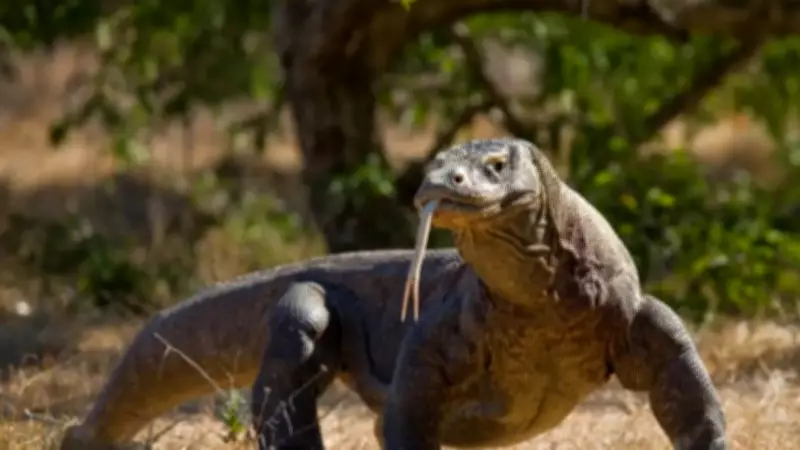
Lizards are often seen as harmless reptiles that creep along walls, rest on rocks, or hide under leaves. However, biologists emphasize a deep evolutionary connection between today's lizards and some of the most fearsome predators in Earth's history, including gigantic crocodiles and terrifying prehistoric reptiles. Through evolutionary research, scientists continue to uncover how modern reptiles have developed from ancient ancestors over millions of years.
Lizards Belong to an Ancient Reptile Lineage
Scientists point out that current lizards evolved from a large reptile family that appeared millions of years ago. Over time, various lizard species adapted to different climates, eventually giving rise to snakes, crocodiles, dinosaurs, and lizards themselves. Despite vast differences in appearance and behavior, these reptiles share numerous biological features inherited from ancient reptilians, such as scales, cold-blooded metabolism, egg-laying, and instinctive survival skills. Fossils also help scientists trace evolutionary relationships among reptiles.
Lizards and Crocodiles Share Distant Reptilian Ancestry
One of the most interesting evolutionary relationships is between lizards and crocodiles. Though they now belong to separate branches, both originated from the same type of reptilian species. Biologists explain that lizards and crocodiles exhibit similar biological characteristics reflecting their common ancestry, including cold-blooded metabolism, egg-laying, and scales. Despite dramatic differences in size and behavior, they remain part of the same reptilian branch.

Dinosaurs and Modern Reptiles Have Closer Ties Than Believed
Studies show that many living reptiles, including lizards, have evolutionary ties to reptiles from the dinosaur era. Although birds are considered the closest living relatives of extinct dinosaurs, modern reptiles still preserve ancient survival techniques. Scientists view lizards as key to understanding the evolutionary history and behavioral habits of extinct reptiles and dinosaurs.
Komodo Dragons Retain Ancient Reptilian Characteristics
The Komodo dragon, one of the largest lizards on Earth, exemplifies reptilian power that has survived millions of years. Living on Indonesian islands, it is distinguished by its impressive size, venomous saliva, and deadly teeth. This lizard demonstrates how efficient reptilian survival features have persisted across millennia.
Evolution Explains Amazing Similarities Between Animals
Through studying DNA, skeletons, and other features, scientists aim to understand reptile evolution from a common ancestor and how they adapted over time. Though house lizards, crocodiles, and dinosaurs seem unrelated, evolution explains the biodiversity of animals and the shared traits that link them.






