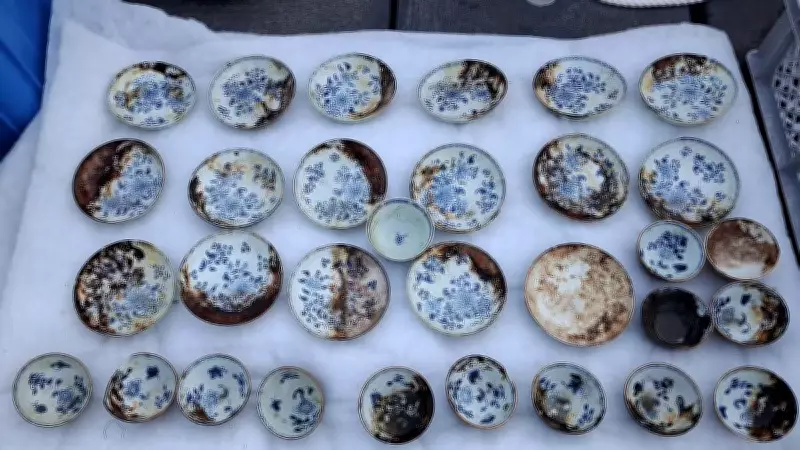
Norwegian maritime archaeologists have recovered a remarkable collection of artifacts from an unnamed 18th-century sailing shipwreck, including porcelain bowls, chandeliers, textiles, and grain. The Norwegian Maritime Museum announced the discovery, highlighting the tightly stacked white and blue porcelain bowls, goblets, and parts of chandeliers among the preserved goods.
Discovery Details
The shipwreck, whose name remains unknown, was found in Norwegian waters. The artifacts were remarkably well-preserved, offering a rare glimpse into 18th-century maritime trade. The porcelain items, likely from China, suggest the ship was involved in long-distance trade routes connecting Europe and Asia.
Artifacts Recovered
Among the items retrieved were:

- White and blue porcelain bowls and goblets
- Textiles and grain
- Parts of chandeliers
The museum noted that the goods were tightly stacked, indicating careful packing for transport. The chandelier components suggest the ship may have carried luxury items for wealthy clients.
Significance of the Find
This discovery provides valuable insights into 18th-century trade networks, craftsmanship, and daily life. The preservation of organic materials like textiles and grain is particularly rare, offering opportunities for scientific analysis. The Norwegian Maritime Museum plans to continue excavations and study the artifacts to learn more about the ship's origin and crew.
Next Steps
Archaeologists will conduct further analysis of the recovered items, including dating and provenance studies. The museum intends to display some of the artifacts in future exhibitions, allowing the public to view these historical treasures.