

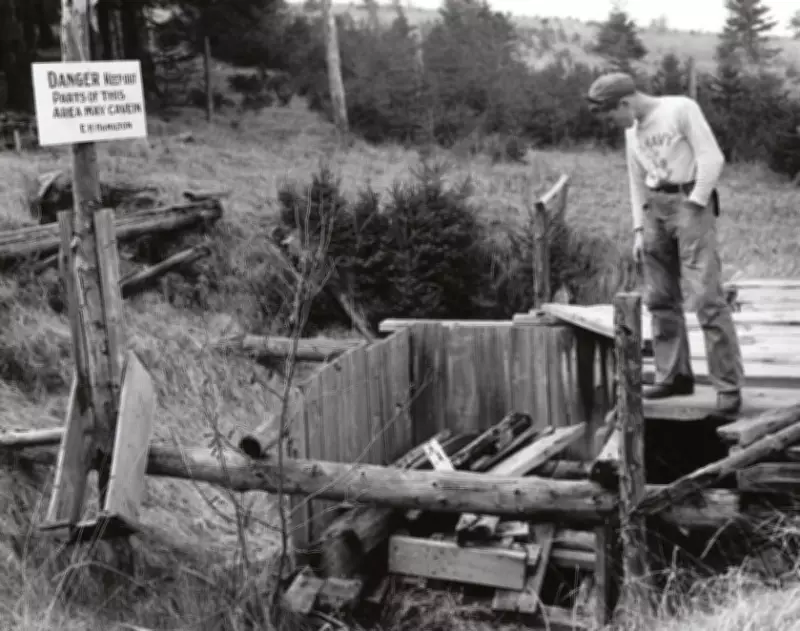
There is something about an unsolved mystery that the human brain finds irresistible. Few have proved as stubbornly captivating as a small depression in the earth on a Canadian island, stumbled upon by three teenagers more than two centuries ago.
How a Pulley and Three Boys Started It All
In 1795, a boy discovered a round hole under an old oak tree on Oak Island, off the coast of Nova Scotia. That single moment triggered one of the longest, costliest, and most obsessive treasure hunts in North American history. Early reports claim McGinnis found an old oak tree with a block and tackle still hanging from it. Below the tree, the grass grew differently, indicating disturbed earth. The image of a pulley overhead and a deliberate hollow below seemed like a clue, but to what, no one could say. The Journal of Folklore Research noted that this origin story gave the site a unique and vibrant beginning that people could repeat, each retelling adding new layers.
The Pit That Kept Going Deeper
Years of organized digging followed the boys' discovery. Searchers reportedly found layers of logs at regular intervals, fueling the belief that someone had hidden something valuable. By the 19th century, the Money Pit had gained international fame. Then it became dangerous. Over the years, six men died digging, and millions of dollars were lost by investors. The pit flooded easily, leading many to think it was booby-trapped. Theories included pirates, the Knights Templar, and even Francis Bacon hiding Shakespeare manuscripts.

By 1953, the story was big enough for a book, showing how far the legend had traveled from local lore to national historical inquiry.
What If There Was Never Any Treasure at All?
Some researchers have challenged the treasure narrative. Historian Joy A. Steele argued in the Journal of Folklore Research that the Money Pit may have mundane origins. Her theory suggests naval stores production—common in colonial coastal North America—could explain the pit's features, including drainage and the block-and-tackle system. What treasure hunters interpreted as an elaborate vault might be the remains of a work site, misread by generations. The pit need not hide gold to show human origin; it was put to some use, then abandoned and half-forgotten. As the journal explains, re-framing does not kill the mystery but redirects it: instead of asking what was buried, we ask who worked there and why their footprint was mistaken for something larger.
Why the Story Still Works
Oak Island fascinates beyond treasure because it is a case study in how humans create legends about places. In its beginnings, the pit was simply a hole in the ground. By repetition, it became the Money Pit. Generation after generation decided it must mean something. Writers, investors, television producers, and amateur historians all had their say, turning it into one of the Western world's most famous unsolved mysteries. The Curse of Oak Island has aired on The History Channel since 2014. Yet no authenticated treasure has ever been found.
What Oak Island offers is arguably more interesting: a living demonstration of how uncertainty, combined with enough physical evidence to keep hope alive, can sustain a story for over 200 years. It lives at the crossroads of history and folklore, and that is why it does not disappear. The pit was discovered in 1795. It asks a question that hasn't been answered. Perhaps it never will.






