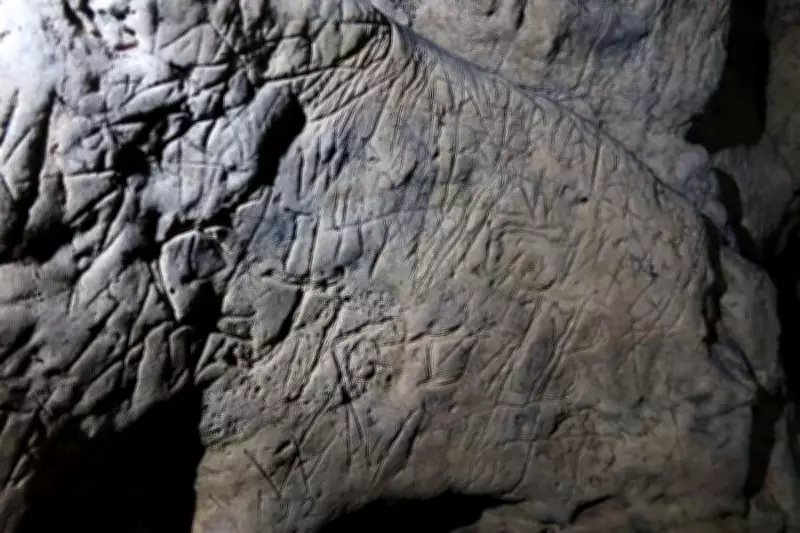
For years, mysterious scratches on a cave wall in Derbyshire were dismissed as accidental marks or too faint to hold archaeological significance. Now, after detailed scientific analysis, experts have confirmed that these markings are the oldest known prehistoric art ever discovered in Britain.
Breakthrough Discovery at Creswell Crags
The remarkable finding was made at Creswell Crags, a limestone gorge on the border of Derbyshire and Nottinghamshire, long recognized as one of Britain's most important prehistoric sites. Researchers used advanced imaging techniques and digital analysis to distinguish intentional carvings from natural damage and recent marks.
The investigation showed clear patterns and repeated techniques that could only have been produced deliberately by human hands. Archaeologists found evidence that the carvings were carefully created using stone tools, with the arrangement, depth, and direction of the engraved lines pointing towards purposeful artistic activity.

Age and Significance
Experts believe the artwork dates back approximately 13,000 to 15,000 years, placing it among the oldest surviving evidence of artistic expression in Britain. The discovery rewrites part of Britain's ancient history and offers a rare glimpse into the lives of hunter-gatherer communities near the end of the last Ice Age.
Creswell Crags has long yielded evidence of human occupation spanning tens of thousands of years, including stone tools and animal remains. The newly confirmed artwork adds an entirely new dimension, demonstrating that these ancient communities were creating symbolic and artistic expressions, showing cultural sophistication comparable to Ice Age groups elsewhere in Europe.
Understanding Prehistoric Life
Although the exact meaning of the engravings remains uncertain, researchers say the discovery provides valuable insight into how prehistoric people understood and interacted with their world. Across Europe, cave art has been associated with storytelling, ritual practices, spiritual beliefs, and representations of animals central to daily life.
The discovery highlights that prehistoric Britain was not a cultural backwater but part of a wider Ice Age world where communities shared traditions, skills, and artistic practices. For archaeologists, this confirmation is more than a scientific breakthrough; it is a reminder that long before written history, Britain's earliest inhabitants were leaving creative marks that would survive for thousands of years.