

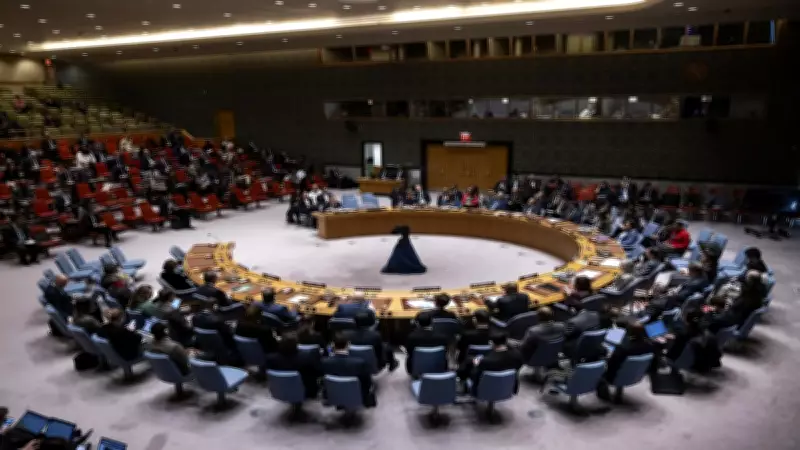
The United Nations General Assembly has elected five new non-permanent members to the UN Security Council, marking a significant shift in the council's composition. Pakistan, whose term is set to expire, will exit the council as Kyrgyzstan makes a historic debut for the 2026-2027 term.
Newly Elected Members
The five nations elected to the UN Security Council for the 2026-2027 term are Kyrgyzstan, Senegal, the Dominican Republic, Greece, and Afghanistan. This election is notable for Kyrgyzstan, a Muslim-majority Central Asian country, which has never before served on the council. Its election is seen as a step toward greater representation of Central Asia in global governance.
Pakistan's Departure
Pakistan, which has been a non-permanent member of the UN Security Council for the 2025-2026 term, will leave the council at the end of its tenure. During its term, Pakistan focused on issues such as counter-terrorism and the situation in Afghanistan. Its departure opens the door for new voices and priorities.

Regional Implications
The election of Kyrgyzstan and Afghanistan brings Central and South Asian perspectives to the forefront. Kyrgyzstan, in particular, is expected to advocate for regional stability and economic cooperation. Senegal's election reinforces Africa's continued representation, while Greece brings a European perspective. The Dominican Republic represents Latin America and the Caribbean.
Voting Process
The elections were held during the 79th session of the UN General Assembly. Candidates required a two-thirds majority of votes from member states present and voting. The newly elected members will begin their two-year terms on January 1, 2026, replacing Pakistan, Panama, Denmark, Ethiopia, and the United Arab Emirates.
Significance of Kyrgyzstan's Election
Kyrgyzstan's debut on the UN Security Council is historic. It is the first Central Asian country to serve as a non-permanent member since Kazakhstan in 2017-2018. The country has emphasized its commitment to multilateralism and peacekeeping. Its election highlights the growing influence of Central Asia in international affairs.
The UN Security Council consists of five permanent members and ten non-permanent members elected for two-year terms. The non-permanent seats are distributed among regional groups to ensure equitable representation.






