

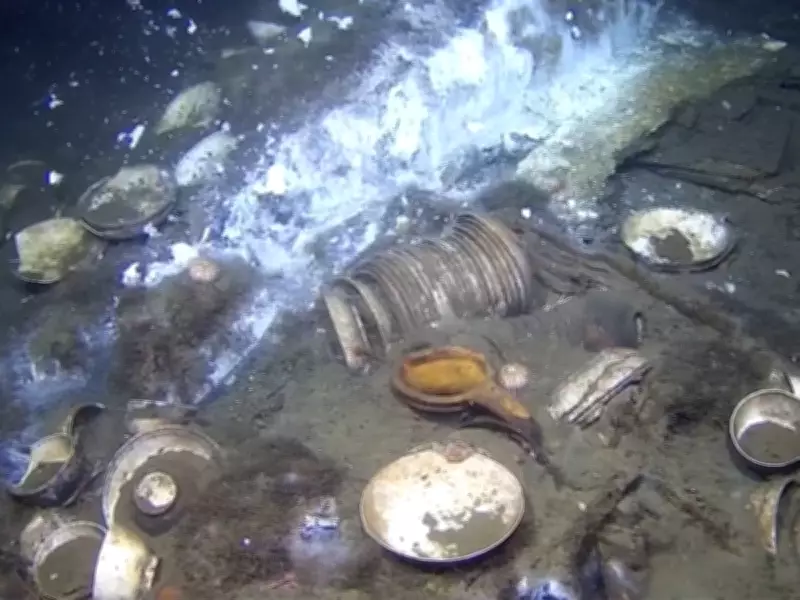
More than 600 metres beneath the surface of the Skagerrak Strait, which lies between Norway and Denmark, archaeologists have uncovered what experts are calling one of the most remarkable shipwreck discoveries ever made in Northern Europe. The vessel is believed to have sunk in the mid-18th century, and it rests on the seabed with a cargo that appears, for all practical purposes, undisturbed. Fragile Chinese porcelain bowls rest on the seafloor, appearing remarkably well preserved. Beside them lie Chinese porcelain, chandeliers, goblets, textiles, grain, and crates believed to hold tea, herbs, and medicines.
The discovery, now known as the "Porcelain Shipwreck", is said to offer an exceptionally clear insight into a time when ideas, wealth and goods were travelling across the continent on a grand scale, helping shape the world we live in today. According to Norway's Directorate for Cultural Heritage, the wreck contains one of the best-preserved cargoes of Chinese porcelain bowls ever found in Northern Europe. It lies at a depth of around 600 metres in the Skagerrak Strait and dates to the mid-1700s.
From a Chance Discovery to an Archaeological Sensation
The wreck was not discovered as a result of any significant search expedition. The find was first made by the Norwegian watchmaker and underwater surveying operator Espen Saastad while conducting seabed investigations. The footage quickly attracted the attention of marine archaeologists. The footage displayed copious amounts of intact porcelain lying on the seabed, and experts say such a sight is extremely rare. When Sven Ahrens, Director of Research at the Norwegian Maritime Museum, spoke to Science Norway, he described the site as a "dream wreck", not only due to the variety of the cargo but its incredible preservation as well. "We often find cargo and freight, but it's usually broken or covered by marine growth. Here, whole plates were lying in stacks on the seabed," Ahrens told the publication.

Chinese Porcelain is a Reflection of a Vast Trading Network
While it is not yet possible for us to know the destination and origin of the ship's voyage, the cargo itself is providing a large amount of information. It is believed that the porcelain is mid-18th-century Chinese blue-and-white ware and was part of the considerable trading network connecting Europe to China during the 'Age of Sail'. Chinese porcelain was among the most sought-after luxury goods in Europe during the 18th century. The Norwegian Maritime Museum suggests that the vessel may have acquired the porcelain in one of Europe's major trading ports, such as Amsterdam, Copenhagen or Gothenburg, before beginning its final voyage.
The Technology Made the Discovery Possible
The depth of the wreck was one of the greatest challenges posed to archaeologists. At nearly 2,000 feet beneath the ocean's surface, it was impossible to investigate the site using conventional diving methods. To solve this problem, archaeologists used a remotely operated vehicle equipped with mechanical arms, cameras, and suction cups to examine and retrieve the items from the seafloor. According to Reuters, marine archaeologists carried out detailed video surveys, photogrammetric mapping and artifact recovery operations during investigations conducted in May 2026. Around 40 objects have already been recovered for conservation and study. The team has also produced a three-dimensional model of the shipwreck, allowing archaeologists to examine the wreck site and its contents more closely without disturbing large parts of the site itself.
Why is This Finding So Important
This wreck is more than just a display of beauty, as it could also be crucial in shaping our understanding of economic history. Marine archaeologist Ivar Aarrestad said the discovery was 'almost a career highlight', the contents providing rare evidence of how luxury goods were transported through European trade networks. It reveals not just what people bought and sold, but how goods were packed, shipped and distributed over long distances. The wreck is of "considerable scientific value", and the Norwegian Directorate for Cultural Heritage believe it could tell us a great deal about Norway's and Northern Europe's maritime history.

Thousands More Items May Await Discovery
This wreck is of particular importance due to the sheer number of artifacts believed to still remain undiscovered on the seabed. Reportedly, there could be thousands more items still located on the sea floor, with several wooden crates already recovered, yet to be opened. Researchers are optimistic that a large-scale archaeological excavation of the site could be possible, something that is unheard of at such a depth within Nordic waters. For now, though, the Chinese porcelain bowls sitting calmly on the seabed remain a powerful visual testament to a time before container shipping and modern global logistics networks, an era when global trade networks already connected distant parts of the world. More than two centuries later, their journey beneath the waves is finally telling us the tale of global commerce, skilled workmanship, and human endeavour.





