

Pune is observing World Bee Day on May 20 with a series of awareness programmes focused on bee conservation, coexistence, and sustainable beekeeping. These initiatives come at a time when declining bee populations are becoming an increasing ecological concern.
Session for Aspiring Beekeepers
At the Central Bee Research Institute, beekeeping expert Amit Godse will conduct a session for aspiring beekeepers at 10 am on Wednesday. The session is aimed particularly at farmers and young people interested in entering the field of apiculture.
"Many youngsters and agrarians want to understand how to begin beekeeping professionally, but they do not know where to start," Godse said. "This session is meant to share practical experiences and explain how they can move forward in a sustainable and scientific way."

Educational Efforts Beyond Commercial Beekeeping
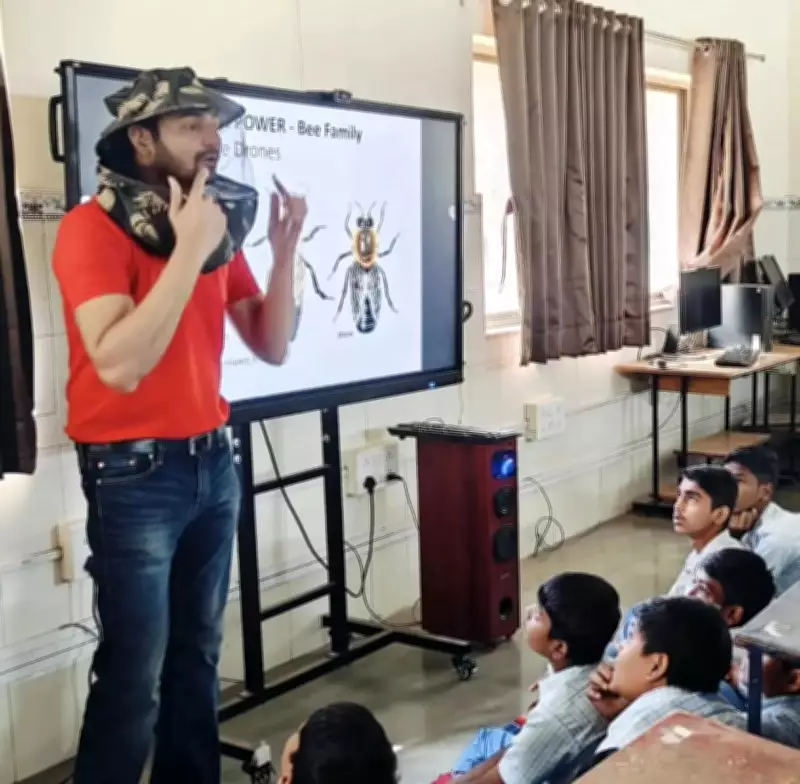
Awareness efforts extend beyond commercial beekeeping into changing how urban residents perceive bees themselves. Bee conservationist Devendra Jani, founder of the Bee The Lead initiative, has been conducting educational sessions across schools, colleges, corporate spaces, and housing societies to encourage coexistence with pollinators vital to biodiversity and food production.
On May 23, Jani will conduct a session at the Rupa Rahul Bajaj Centre of Art in Pune, where participants can hold an emptied bee hive in their hands and examine the hive structure to understand the roles of worker bees and queen bees. "Most people only associate bees with honey or stings, but there is an entire world beyond that. Through my sessions, I try to introduce people to different kinds of bees and their fascinating behaviour," Jani said.
Focus on Lesser-Known Species
His workshops focus on lesser-known species such as leaf cutter bees, which create circular patterns on leaves, and solitary carpenter bees that drill into wood. "Many of these bees are losing their habitats because mud walls, old wood, and open spaces are disappearing from cities," he said.
Jani will also teach participants how to create "bee hotels" using discarded bottles filled with bamboo and paper straws, which are later occupied by solitary bees. "It is important to make children curious instead of scared of bees. After getting to know how many different types of bees there are, each playing their own role in nature, these children stop their parents from getting scared when they spot a bee and instead pass on the knowledge they acquired," Jani said.
Coexistence in Housing Societies
Jani has also worked with housing societies that initially sought bee removal. In one society in Magarpatta, residents eventually agreed to coexist after understanding that some bee species are migratory and naturally leave once flowering seasons end. "I explained that if bees are present, it usually means the environment is healthy and told them about precautions like avoiding smoke, perfumes, or sudden movements around hives. People there slowly realised bees are not naturally aggressive," he said. "After observing them for months, residents were actually sad when the bees left, feeling guilty thinking that they did something wrong that made the bees leave."
Engaging School Students
His work has also reached government schools. At Dada Gujar School, over 200 students successfully nurtured bee-friendly saplings distributed six months ago. "I told the children that I will give them a gift if they can keep the sapling alive for six months, which they have done. Ahead of World Bee Day, I gifted them steel lunchboxes as a symbolic reminder that the food we carry every day is possible because bees pollinate crops," Jani said.






