

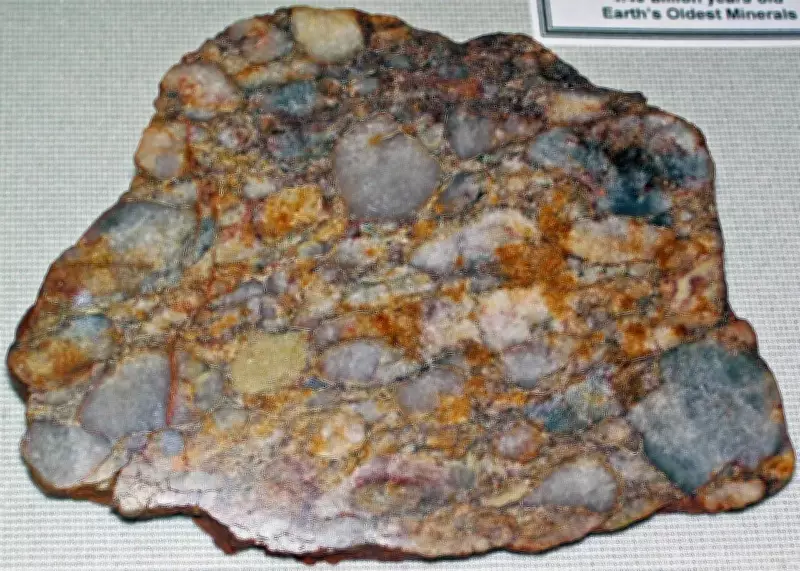
In the remote wilderness of northern Quebec, near the shores of Hudson Bay, lies a rock formation known as the Nuvvuagittuq Supracrustal Belt. These ancient rocks, among the oldest on Earth, have long been considered a geological curiosity. However, recent discoveries have thrust them into the spotlight of a heated debate about the origin of life.
Microscopic Structures Spark Debate
Scientists studying these formations have identified microscopic, tube-like structures and fine filaments composed of hematite, a form of iron oxide. These features bear a striking resemblance to modern microbes that thrive near hydrothermal vents on the ocean floor. If confirmed as fossils, they would represent the oldest evidence of life ever discovered, dating back at least 3.77 billion years.
This finding suggests that life emerged on Earth remarkably quickly after the planet's formation. The presence of these structures indicates that organisms appeared almost as soon as liquid water existed on the surface, challenging the assumption that early Earth's harsh conditions precluded life.

Chemical Evidence Supports Biological Origin
The identification of these potential fossils is not solely based on their shape. To confirm their biological origin, scientists rely on chemical signatures. In a landmark study titled "Evidence for early life in Earth's oldest hydrothermal vent precipitates," researchers reported that these structures are associated with minerals such as graphite and apatite, which are often byproducts of biological activity. The study proposes that the filaments were formed by ancient iron-oxidizing bacteria living on the edges of seafloor vents. By linking physical morphology to specific chemical environments, the case for these being true fossils is strengthened.
However, the scientific community remains cautious. Over billions of years, these rocks have been subjected to immense heat and pressure from tectonic activity. Some researchers argue that the tube-like structures could result from high-pressure fluids flowing through the rock, rather than biological processes. This ongoing debate has made the Quebec rocks a focal point in the search for life's origins.
Diverse Ancient Life Community
Further research into the Nuvvuagittuq belt has revealed a surprising diversity of ancient life traces. A follow-up study published in Science Advances analyzed isotopes within the rock and found evidence of different metabolic pathways, including sulfur and iron metabolism. This suggests that life was already diversifying into various ecological niches nearly 4 billion years ago. If accurate, this implies that the origin of life itself occurred even earlier, possibly shortly after Earth's formation.
These discoveries have profound implications for the search for life on other planets, such as Mars. The rapid evolution and diversification of life in ancient hydrothermal vents on Earth suggest that similar environments on Mars could have hosted life. The presence of wet volcanic vents on Mars raises the possibility that microbial life may have emerged there as well.
For now, the Quebec fossils remain putative, meaning they are the best candidates but the debate is far from settled. Each new study brings us closer to understanding the earliest chapters of life on Earth. Regardless of the final verdict, these ancient rocks have irrevocably altered our understanding of life's origins.
About the Author: TOI Science Desk
The TOI Science Desk is a team of inquisitive journalists dedicated to exploring the realms of discovery and curating captivating science news for readers of The Times of India. They aim to be a scientific companion, delivering daily wonder and enlightenment on topics from genetic engineering to space exploration and artificial intelligence. Their commitment is to demystify science and make it accessible to all.






