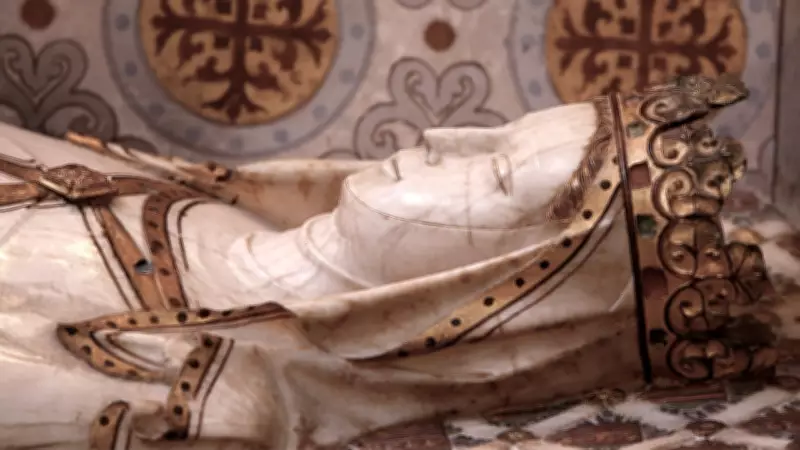
Archaeologists have opened the tomb of Queen Elisenda of Montcada, one of medieval Europe's most influential queens, for the first time in nearly 700 years. The investigation took place at the Royal Monastery of Santa Maria de Pedralbes in Barcelona as part of the monastery's 700th anniversary celebrations.
Who Was Queen Elisenda?
Born around 1292 into the powerful House of Montcada, Queen Elisenda married King James II of Aragon, connecting her to a dominant political power in the western Mediterranean. After her husband's death in 1327, she did not retreat from public life but instead established herself in a palace beside the monastery she had founded. She wielded social, political, and economic authority for another 37 years, securing extensive lands and privileges for the monastery and transforming it into a prestigious religious institution.
Historians regard Elisenda as one of the most prominent female patrons of medieval Catalonia, with the monastery remaining one of the region's best-preserved Gothic landmarks. By her death in 1364, she had shaped religious, political, and charitable life for nearly four decades.

The Discovery Inside Her Tomb
Archaeologists from the Barcelona Institute of Culture opened Elisenda's tomb and found a wooden box containing her skeletal remains. Analysis revealed she was around 70 years old at death and likely suffered from osteoarthritis. Traces of gold-embroidered silk textiles and aromatic herbs were also found. Although buried in a simple religious habit, the luxurious fabric suggests elements of her royal status were incorporated into the burial.
The findings provide rare physical evidence of how elite women were commemorated in medieval Catalonia and offer insights into aristocratic funerary customs.
Unique Double Tomb
Queen Elisenda's tomb is unique: from inside the church, she appears as a queen with royal garments and symbols of authority, while from the monastery cloister, she appears as a humble religious woman. The investigation revealed that the monument consists of two separate burial chambers divided by a wall, deliberately designed to express her dual identity as a sovereign ruler and a devout widow.
More Discoveries Beneath the Monastery
The project also examined eight medieval graves within the monastery complex, recovering remains of 25 individuals, including one burial containing nine people. Among the discoveries were men who appeared to have died from stab wounds and a woman likely died during pregnancy. A preserved ponytail attached to a skull was also found, along with fragments of parchment, written documents, and medieval sheet music.
These discoveries provide an unusually detailed glimpse into the lives and deaths of people associated with the monastery during the Middle Ages.
Further Research
Researchers are now conducting DNA analysis on bone and tooth samples to confirm identities, determine family relationships, and better understand ancestry, health, and lifestyles. The results could help reconstruct the social network surrounding Queen Elisenda and provide a detailed biological portrait of a medieval religious community in Catalonia.
The opening of Queen Elisenda's tomb offers rare physical evidence of medieval royal burial practices and the role of elite women in shaping religious institutions. The excavation has revealed new information about life at the Monastery of Pedralbes, including medieval health conditions, violence, pregnancy, literacy, and religious life. Combined with ongoing DNA analysis, the discoveries could help reconstruct one of the most detailed pictures of a 14th-century Catalan community ever assembled.