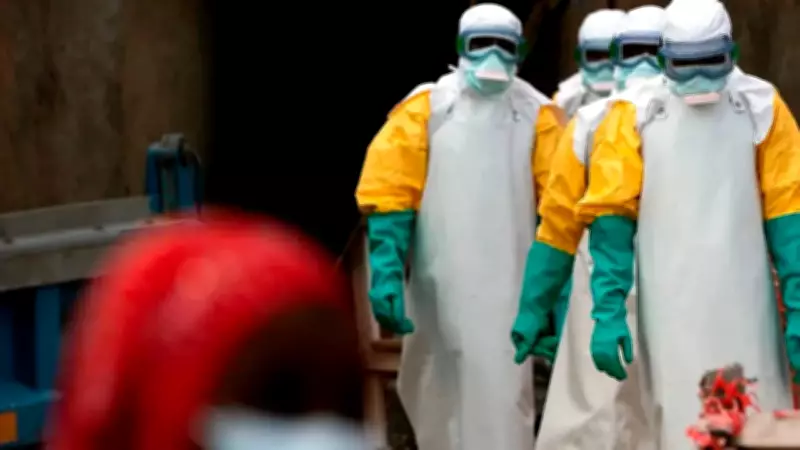
A deadly outbreak of Ebola has once again emerged, this time in the Democratic Republic of the Congo (DRC), a nation that has faced the disease more than any other. However, health officials are particularly alarmed now because the virus spreading is the Bundibugyo strain, a rare variant with no approved vaccine or proven treatment. Although over 20 Ebola outbreaks have occurred in Congo and Uganda, this marks only the third detection of Bundibugyo, according to The Associated Press.
Rapid Cross-Border Spread
Within days of the outbreak confirmation, the virus crossed an international border. The World Health Organization (WHO) declared it a global health emergency within 48 hours. The alarm was first raised on Friday, May 15, when health officials confirmed an outbreak in the Ituri region of northeastern DRC, near the borders with Uganda and South Sudan.
Preliminary laboratory results from the Institut National de Recherche Biomédicale detected Ebola in 13 of 20 samples tested, according to Africa CDC. At that point, around 246 suspected cases and 65 deaths had been recorded, mainly in the Mongwalu and Rwampara health zones. Al Jazeera reported that this outbreak came over five months after the previous one, where 43 people died. The new variant appeared to have been spreading silently for some time before detection.

Challenges of Violence and Remote Location
Ituri is more than 1,000 kilometers from the capital Kinshasa. Just days before the outbreak was confirmed, an attack by armed rebels in the same province killed at least 69 people, as Al Jazeera reported. The violence complicates the work of health teams and raises concerns as the virus spreads at alarming speed.
Why This Outbreak Is Different
The term 'Ebola' became widely known during the catastrophic 2014–2016 West Africa epidemic and the 2018–2020 DRC outbreak, both caused by the Zaire variant. However, health officials say the current outbreak is different. Dr. Jean Kaseya, Director General of Africa CDC, stated that the outbreak began in April. 'So far, we don't know the index case. It means we don't know how far is the magnitude of this outbreak,' he added.
On April 24, symptoms of the first suspected case were registered, followed by the first death on April 27. By the time health authorities were alerted on social media on May 5, 50 deaths had already been recorded, according to Africa CDC. This is only the third time the Bundibugyo strain has been detected: first in Uganda's Bundibugyo district between 2007 and 2008 (149 cases, 37 deaths), and second in 2012 in Isiro (57 cases, 29 deaths).
Rapidly Growing Numbers
The pace of case counting was itself a warning. On Friday, Africa CDC reported 246 suspected cases and 65 deaths. By Saturday, May 16, the figures had jumped to over 300 suspected cases and around 87 deaths, according to The Associated Press. Africa CDC expressed concern about further spread due to factors such as the urban context of Bunia and Rwampara, intense population movement, mining-related mobility around Mongwalu, insecurity, and gaps in contact tracing and infection prevention.
'Given the high population movement between affected areas and neighbouring countries, rapid regional coordination is essential,' said Dr. Kaseya on May 15. 'We are working with DRC, Uganda, South Sudan, and partners to strengthen surveillance, preparedness and response, and to help contain the outbreak as quickly as possible.'
Virus Crosses into Uganda
On Saturday, Ugandan health authorities confirmed that the virus had crossed into Uganda. A 59-year-old Congolese man traveled from DRC to Kampala and died, later confirmed as a laboratory-verified case of Ebola, the BBC noted. A second case was subsequently identified in Kampala, with the patient also traveling from DRC. Uganda's government moved quickly to trace contacts.
WHO Declares Global Health Emergency
On Sunday, May 17, WHO Director-General Tedros Adhanom Ghebreyesus formally declared the Ebola outbreak in DRC and Uganda a Public Health Emergency of International Concern (PHEIC). The WHO clarified that the outbreak does not meet the definition of a pandemic emergency and advised against closing international borders, as that would delay response efforts.

Even before the WHO declaration, Africa CDC had called an urgent high-level coordination meeting on May 15, bringing together health authorities from DRC, Uganda, and South Sudan, alongside representatives from WHO, UNICEF, US CDC, European CDC, MSF, the Gates Foundation, and pharmaceutical partners including Gilead Sciences, Merck & Co., Johnson & Johnson, BioNTech, and Moderna. The agenda included immediate response priorities, cross-border coordination, surveillance, laboratory support, infection prevention, risk communication, safe burials, and resource mobilization.
Concerning History Demands Attention
This is the DRC's 17th confirmed Ebola outbreak since the virus was first identified in 1976 near the Ebola River, the BBC reported. Around 15,000 people have died from Ebola in African countries over the past 50 years. The deadliest outbreak occurred between 2018 and 2020, killing nearly 2,300 people. Last year, around 45 people in a remote region died in an outbreak, according to the BBC.
Ebola virus disease (EVD) is a severe illness that attacks multiple body systems, damaging blood vessels, organs, and the immune system. The Africa CDC describes transmission through direct contact with bodily fluids of an infected person, contaminated materials, or remains of someone who died from the disease. It spreads through infected bodily fluids such as blood, semen, and vomit, but not through the air, limiting its transmissibility compared to respiratory illnesses like COVID-19.
Symptoms appear between two and 21 days after infection, starting with flu-like symptoms such as fever, headache, and tiredness. As the disease progresses, vomiting and diarrhea develop, and eventually organs stop working. Some patients may experience internal and external bleeding.
Future Outlook
The biggest concern is how quickly the infection can deteriorate a person's condition, so health officials stress early diagnosis. Although response teams are faster and more responsive than in past conflict zones, limited medical care in regional areas can create hurdles. With a confirmed case in Goma and cases in Uganda, health officials are acutely aware that population movement, urban density, and the lack of effective countermeasures against the Bundibugyo virus pose significant challenges.
Africa CDC said it will work with partners to assess the availability and suitability of countermeasures once the exact strain is confirmed. In the meantime, the agency urged communities in affected and at-risk areas to follow national health guidance, report symptoms early, avoid direct contact with suspected cases, and cooperate with response teams.
The WHO's declaration is a loud signal to the international community. The Bundibugyo virus may not yet be globally recognized, but it is Ebola. And Ebola, as history has shown, waits for no one.