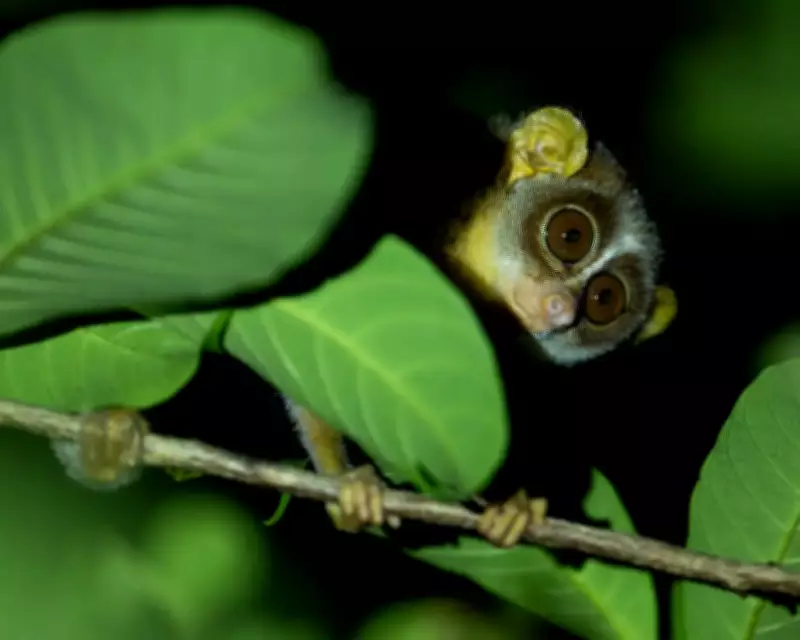
Panaji: The elusive and endangered slender loris, a small arboreal primate known for its large eyes and nocturnal lifestyle, has been sighted outside a protected forest area in South Goa. The sighting was captured on camera by Omkar Dharwadkar, president of the Goa Bird Conservation Network (GBCN), at an undisclosed location.
Legal Protection and Threats
The slender loris is protected under Schedule I of the Wildlife (Protection) Act, 1972, which makes hunting, poaching, or trading the species a punishable offence. Dharwadkar noted that the primate faces significant threats, including habitat degradation and wildlife trafficking.
Significance of the Sighting
While sightings outside protected areas are not very common, they are not unusual if there is a continuous forest tract connecting these regions. The species can move across such landscapes, and its presence indicates the importance of maintaining forest connectivity, said Naveen Kumar, Conservator of Forests, Wildlife and Ecotourism.

Deputy Conservator of Forests, Jiss Varkey, emphasized that the slender loris is widely considered an indicator species for forest health and ecosystem integrity. Because of their specific ecological needs, their presence or absence reveals a lot about forest health. They are highly sensitive to habitat fragmentation, deforestation, and human disturbances. If a forest is degrading, the loris population is usually the first to decline. Therefore, the presence of the slender loris is a good indicator of a healthy forest ecosystem.
Nocturnal Behavior and Population Status
The latest sighting occurred at night, which is consistent with the species’ natural behavior. Dharwadkar stated that nobody really knows the population status of the slender loris. There has been very little work done on the species because studying it is difficult, requiring night-time surveys and obtaining permissions to work inside forests.
Conservation Measures
The most important factor for its conservation is maintaining connectivity in the forest canopy. Trees need to remain connected because that is how the animal travels, Dharwadkar added.
For more updates on wildlife and conservation, follow our coverage.