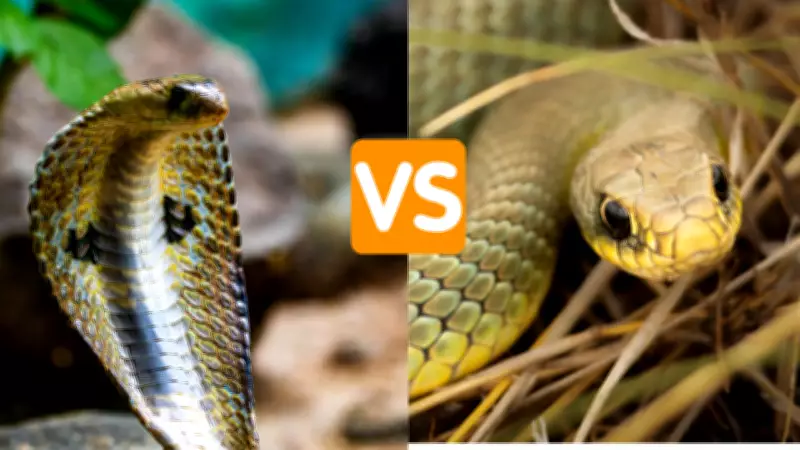
Comparing the rat snake and the Indian cobra is one of the most searched wildlife topics in India, especially in rural and semi-urban areas where human-animal interactions are common. Knowing how to distinguish between a non-poisonous rat snake and a poisonous Indian cobra is crucial for safety and preventing unnecessary panic. Many people mistakenly identify venomous snakes, leading to the needless killing of beneficial species. Here is a detailed guide on the rat snake versus the Indian cobra.
What is a Rat Snake: Ptyas mucosa
The rat snake is a harmless colubrid snake found throughout India. Although excitable and fast-moving, it poses no danger to humans, preying on small reptiles, birds, and mammals.
Main Features of the Rat Snake
- Slim body of uniform brown or olive colour
- Very quick and very cautious
- Non-poisonous and not aggressive towards people
- Eats mostly rats, frogs, and small reptiles
According to research titled 'The genome assembly and annotation of the Oriental rat snake Ptyas mucosa,' these snakes are considered beneficial in agriculture as they help control rodent populations, as noted by the Wildlife Institute of India. When threatened, Oriental rat snakes inflate their necks, imitating the king cobra or Indian cobra to scare predators.

What is an Indian Cobra: Naja naja
As per an article on 'Highlights of animal venom research on the geographical variations of toxin components, toxicities and envenomation therapy,' the Indian cobra is one of the most medically dangerous snakes in India. It is known for its hood display when threatened. Naja is widely distributed in Southeast Asia and South Asia. Studies on venom variation focus on India, Malaysia, and other regions, involving subspecies such as Naja naja, Naja atra, and Naja kaouthia.
Important Features of an Indian Cobra
- Hood spreading when threatened
- A clear 'spectacle' marking on the back of the hood in many specimens
- Strong neurotoxic venom
- Normally shy, but will defend itself if attacked
The World Health Organisation considers cobra bites a major cause of snakebite deaths in South Asia.
Rat Snake vs Indian Cobra: Key Identification Differences
Bite Risk and Medical Importance
While the rat snake poses no venom danger, it may bite in self-defence when handled. In contrast, the Indian cobra is clinically significant due to its neurotoxic venom, which can cause respiratory paralysis. According to the Indian Council of Medical Research, timely antivenin administration is critical for cobra bites.
Symptoms of Cobra Envenomation
- Ptosis (drooping eyelids)
- Difficulty breathing
- Muscle paralysis
- Dizziness and loss of consciousness
What to Do if You Encounter Either Snake
In case of an encounter:
- Stay calm and do not try to harm the snake.
- Keep a safe distance.
- Contact local wildlife rescue authorities.
- Let the snake retreat on its own.
Killing snakes can increase bite risk and disrupt the ecology.
Ecological Importance of Both Snakes
Both species play vital roles in the Indian ecosystem. Rat snakes help control rodent populations, reducing crop damage. Cobras also regulate rodents and amphibians, maintaining ecological balance.