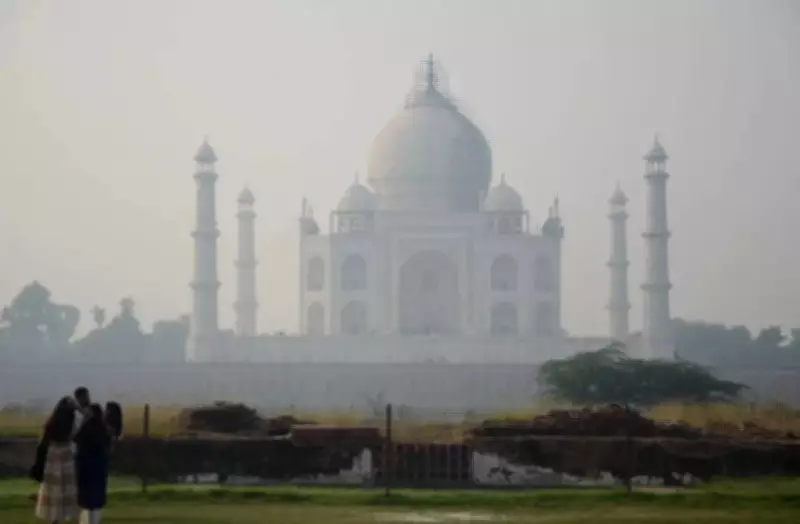
The Uttar Pradesh Pollution Control Board (UPPCB) has submitted a report to the Taj Trapezium Zone (TTZ) authority, highlighting a concerning increase in sulphur dioxide (SO2) and nitrogen dioxide (NO2) levels at several locations. The TTZ authority has subsequently sought an explanation from the board regarding the findings.
Report Findings
According to the report presented to TTZ chairman and divisional commissioner Nagendra Pratap, SO2 concentrations in Mathura and Firozabad, along with NO2 levels in Bharatpur, have exceeded the prescribed annual standards. This has raised serious concerns about pollution in the region surrounding the iconic Taj Mahal.
Monitoring data collected between February and May 2025 revealed that the annual permissible limit for sulphur dioxide is 20 micrograms per cubic metre (µg/m³). In Mathura, SO2 levels rose from 19.7 µg/m³ in February to 25.06 µg/m³, crossing the threshold. The highest SO2 concentration was recorded in Firozabad, where levels touched 32.8 µg/m³ in March 2025, significantly above the permissible limit. In Bharatpur, NO2 concentrations reached 32.2 µg/m³ in February, breaching the prescribed annual standard of 30 µg/m³.

Major Contributors
The report identified emissions from Mathura Refinery, Firozabad's glass industry, and diesel generator (DG) sets used by commercial establishments as major contributors to the increase in pollution levels. Officials also cited the growing movement of heavy diesel vehicles and commercial traffic on highways as a key reason behind the rise in NO2 concentrations.
Apart from industrial and vehicular emissions, the assessment pointed to increasing tourism activity and commercial transportation as additional factors contributing to the pollution burden across the TTZ region.
Authority's Response
Taking serious note of the findings, Agra divisional commissioner and TTZ chairperson Nagendra Pratap directed the concerned departments to fix accountability and strengthen monitoring mechanisms to curb further deterioration in air quality.
Background on TTZ Regulations
The findings have renewed concerns over pollution control measures in the protected zone around the Taj Mahal. In a landmark judgment in 1996, the Supreme Court designated a 10,400 sq km area around the monument as the Taj Trapezium Zone to shield the Unesco World Heritage Site from industrial and vehicular pollution. The order prohibited the use of coal and coke in industries within the zone, mandated a transition to cleaner fuels such as natural gas, and required the relocation or closure of non-compliant industrial units.
In addition to TTZ regulations, Agra also implements the Graded Response Action Plan (GRAP) under the Commission for Air Quality Management (CAQM). However, these measures come into force only when the Air Quality Index (AQI) crosses the 200-mark threshold.