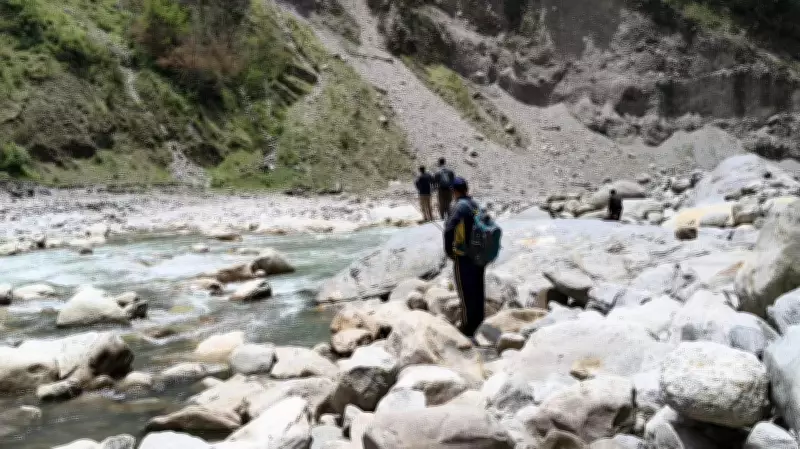
The search for Noida-based software engineer Abhishek Chauhan, 36, who went missing while returning from the Pindari Glacier trek in Bageshwar district on Wednesday, entered its fourth day on Monday with no major breakthrough. Teams from the State Disaster Response Force (SDRF), police, fire services, and the revenue department continued combing the rugged high-altitude terrain despite rain and rapidly changing weather conditions, which officials said were hampering rescue efforts.
Challenging Conditions Hamper Search
Kapkot circle officer Ajay Sah stated, “Continuous rainfall and the challenging terrain of the higher Himalayas are making the operation extremely demanding. Apart from Chauhan’s camera, recovered earlier along the Dwali route, no significant clue has emerged.” The recovery of the camera had initially raised hopes, but it has not provided any leads to his whereabouts.
Bageshwar district magistrate Apurva Pandey said, “The administration is closely monitoring the operation and has deployed all available resources. Multiple agencies are working in coordination and search efforts are continuing despite adverse weather conditions. Our priority is to locate the missing trekker at the earliest.”

Comparison to 2017 Case
Chauhan’s disappearance has drawn comparisons with the unresolved 2017 case of Raipur-based businessman and trekker Vagish Chandrakar, who vanished without a trace in the Sunderdhunga-Jatoli region at the age of 29. Despite extensive searches involving rescue agencies, police, and local residents, Chandrakar was never found. A final report was eventually filed, bringing the investigation to a close.
Officials said Chandrakar had arrived in the Pindari-Kafni-Sunderdhunga region for trekking and was last seen near Jatoli, after which all communication ceased. Multiple search operations failed to uncover any evidence explaining his disappearance. “The 2017 missing trekker case was investigated extensively, but after nine years, a final report was filed and the case was closed,” the circle officer added.
Concerns Over Trekking Safety
The two cases, separated by nearly a decade and linked to the same remote mountain region, have renewed concerns about trekking safety in Uttarakhand. Questions have been raised about the effectiveness of digital registration systems, real-time GPS monitoring, and emergency response mechanisms on high-altitude routes.
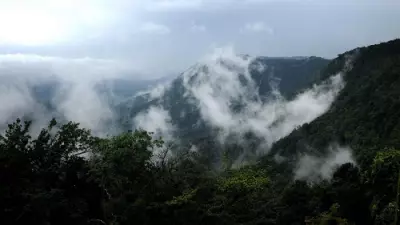
Locals familiar with the route said the Pindari Glacier trek and adjoining high-altitude trails are characterized by unpredictable weather, steep valleys, fast-flowing streams, and dense forests. Mobile connectivity is absent across much of the region, making emergency communication difficult.
Expert Opinions
Experts cautioned against speculation, noting that mountain accidents can result from falls, hypothermia, sudden weather changes, disorientation, glacier hazards, or natural calamities. However, they added that cases in which trekkers disappear without a trace despite exhaustive searches often leave investigators with few answers.
Bhuvan Chandra Chaubey, a veteran trekker who has completed the Pindari route nearly 100 times over the past three decades and guided more than 10,000 trekkers on the trail, said, “Mandatory GPS tracking devices, digital check-in points, and stronger communication infrastructure could significantly improve search-and-rescue operations in future emergencies.” He emphasized that such measures could help prevent tragedies and aid in quick location of missing individuals.