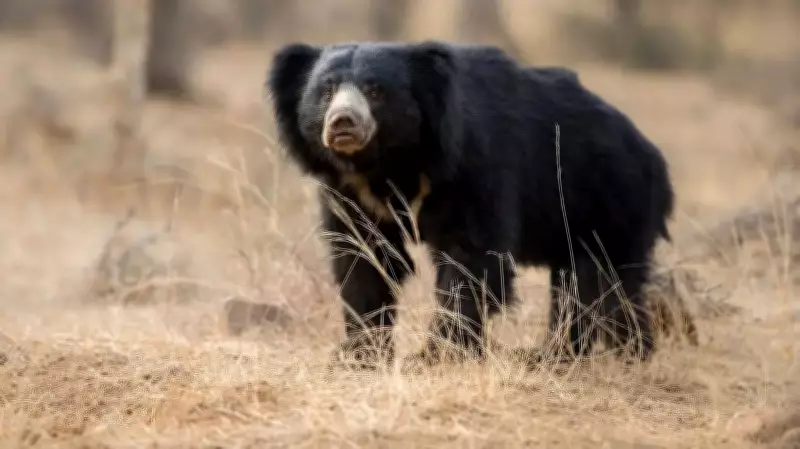
The Wildlife Institute of India (WII) in Dehradun has launched a comprehensive study of sloth bears in western Rajasthan, specifically targeting the Jaswantpura region in Jalore and Mount Abu. The initiative comes in response to rising bear numbers and increasing human-wildlife interactions, which have become significant conservation concerns.
Study Objectives and Methodology
According to forest officials, the study will examine the species' ecology, habitat conditions, food availability, breeding patterns, movement behavior, and wildlife corridors. Researchers will also survey areas where sloth bears have been recorded and assess the factors influencing their distribution across the landscape.
A major focus is the growing movement of bears beyond forest boundaries. Officials have observed that while sloth bears traditionally entered inhabited areas during summer in search of food and water, they are now increasingly venturing into settlements during winter as well. The reasons behind this behavioral shift and its implications for both conservation and public safety will be examined.

Data Collection and Analysis
Field teams will collect data through footprints, scat samples, and other biological indicators to map movement patterns, identify critical habitats, and understand the connectivity of wildlife corridors. Researchers will also assess the westernmost distribution range of sloth bears and identify ecologically sensitive areas requiring long-term protection.
The survey will continue until August, after which a detailed report will be prepared. Divisional forest officer J D Charan stated that the findings are expected to contribute to future conservation planning, habitat management, and measures aimed at mitigating human-wildlife conflict in the region.
Significance of the Study
The exercise assumes significance as sloth bear numbers have increased substantially in parts of Rajasthan. According to the latest wildlife census, 89 sloth bears have been recorded in the Sudha Mata Conservation Reserve in Jaswantpura, compared to 38 when the reserve was notified in 2010.
Previous research has identified the Jessore-Mount Abu landscape as one of the most important sloth bear habitats in western India. Researchers have noted that shrinking wild spaces are pushing the shy animals into greater contact with humans. They warned that growing tourism and pilgrimage activity, coupled with increasing garbage generation, could aggravate conflicts.
Expected Outcomes
The study is expected to help develop strategies for coexistence, identify remedial measures, and strengthen long-term conservation planning for the species in western Rajasthan.